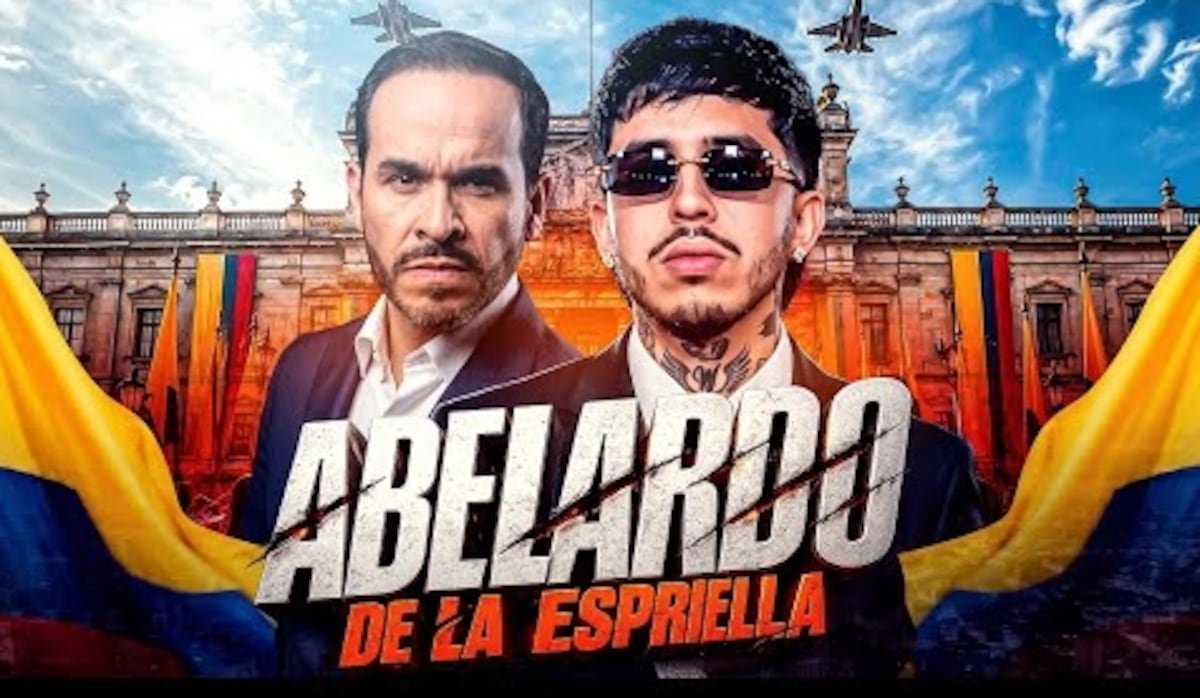
If Colombia’s next president were chosen on the success of their digital strategy, the undisputed winner would be Abelardo de la Espriella. Beyond the ethical risks, the far-right candidate has managed to articulate his narrative during the campaign, while his rival, left-wing Senator Iván Cepeda, has struggled to consolidate his message on social media. With less than three days until the vote to decide Gustavo Petro’s successor, the progressive campaign is rushing to redesign its strategy.
Below are the four key points in which De la Espriella has outpaced Cepeda in the digital battle.
The role of influencers
The strategies of both candidates have been shaped by influencers, who burst onto the scene in the last presidential campaign and have dominated attention on social platforms. “The role of secondary accounts has been fundamental since 2022. the right has learned a lot about that, which the left used to dominate. De la Espriella has brought influencers on board and funded them,” explains Jessica Blanco, co-founder of the consultancy Sonante and one of the people who took charge of former candidate Sergio Fajardo’s social media.
The far-right candidate has surrounded himself with a group of influencers who accompany him at events and have helped spread his messages, but above all to establish narratives and run contrast campaigns. Digital strategist José Paz, Blanco’s colleague at Sonante, explains: “The modus operandi of Abelardo’s campaign has several steps. It consists of creating a rumor, positioning it, and building a snowball effect in public opinion until it generates conversation. When its ready, the candidate delivers the final blow.” These techniques, notes Eugénie Richard, a lecturer at the Universidad Externado, “allow campaigns to do or say things that candidates themselves cannot say,” which highlights one of the ethical and democratic risks of these strategies.
The most recent example occurred this week, when several accounts published videos challenging the progressive candidate Cepeda to disclose medical exams, which raised doubts about his health. In the end, to counter them, the leftist senator held a press conference and published a document that cleared up those doubts and certified he is “in perfect condition to exercise the presidency.”
By contrast, the influencers supporting Cepeda have been relegated to a secondary role. Content creators and prominent figures such as political scientist Karol Solís Menco and Congressman Alfredo Mondragón have publicly complained to the campaign and to its director and fellow congressman Gabriel Becerra, urging better coordination with influencers to help land the proposals. For the second round, Paz notes a change. “In the first round, no organization around campaign messages could be identified. In the second round, yes, but more as a process of self-organization than something directed.”
Viral videos versus polished speeches
The candidates chose diametrically opposed strategies to communicate their messages. De la Espriella prioritized short, emotionally charged videos on social media. Those are favored by algorithms and are — according to authors like sociologist Mauricio García Villegas — harmful to democratic deliberation. “The people are not stupid, they are wise. The people have buried Petro and his accomplices,” De la Espriella said in October 2025, when the left recorded a historic vote in a party primary and chose Cepeda as its candidate. The far-right candidate even opened a bottle of wine on camera to celebrate. “I will make Petro and his accomplices pay for their crimes, without equivocation and with determination.”
Cepeda opted for the exact opposite: he refused to dance on TikTok and instead posted his full statements on social media, without selecting short, viral-ready clips. “He is someone more inclined to complex thinking, to long reflections. He is not used to communicating in headline-friendly terms,” says Richard. The leftist candidate read pre-written speeches. They tried to offer a counterpoint to Petro’s improvisation, but they did not spark great passion nor help his digital strategy.
That is why De la Espriella steamrolled Cepeda. The most striking evidence is that the left-wing candidate began recording more short videos for social media after the first round. One shows a gathering of Colombia national team supporters, all wearing the jersey, in an apartment. “Who are we going to cheer for?” someone asks. “What do you mean who? Iván!” they answer in unison. Then they open the door and the candidate appears. “For life!” he exclaims. He also posted a behind-the-scenes video of a similar scene: Cepeda makes a mistake, asks to record again, and explains it is very difficult for him. His YouTube channel is now full of short videos of under 30 seconds.
For experts, its too little, too late. “You cannot fix what hasn’t worked for months in three weeks. Digital strategy takes time, as the candidate gets used to appearing on camera and experimenting with new languages. Thats why what we see feels forced: its obvious he’s not used to recording, to smiling, and that conveys a lot,” says Paz. The expert notes that Cepeda increased his YouTube ad spend, but he cannot outshine his rival, who also has videos more finely targeted by audience. Meanwhile, De la Espriella releases ever more forceful messages. “The next time we meet, I will be your president!” he exclaims in an audio circulated on WhatsApp.
The use of AI
The advent of artificial intelligence has set the pace of the digital strategy. It has made it cheaper to produce content and increased the volume of material. One of the most notable pieces was a video showing various political leaders, such as former presidents Álvaro Uribe and Juan Manuel Santos and former Bogotá mayor Claudia López, on a country estate. At the end of the clip a phrase appears — “the usual ones” — coined by De la Espriella suggesting they are trying to affect the far-right campaign. AI made it possible to create a scene that is unthinkable in real life and unleashed a feud among opposition campaigns, with complaints and cross messages on X in which the established right accused the far right of unethical conduct.
Other AI-generated videos, created by De la Espriella supporters, have tapped into the soccer fever around the World Cup. One shows Gustavo Petro, Hollman Morris, Juliana Guerrero and other figures from the Historic Pact political grouping on a team being announced sarcastically: “Here comes the puppet of [Daniel] Quintero; up front is Juliana Guerrero, the goal-scoring machine.” That blend of criticism, humor and satire has been mirrored positively for characters from the far-right campaign. In another video, figures from the Colombia national team appear and, in a flash, De la Espriella scores a goal in a stadium that erupts with joy. “The match the Petristas don’t want won,” the video is titled.
For Paz, there is no problem using AI as long as it is not employed to create disinformation and blur the line with reality. The expert calls for “political actors to assume responsibility and rebuild trust” to avoid increasing societal mistrust. However, for Richard, AI “has not pushed the ethical boundary of campaigns very far” to date.
A military salute versus a heart gesture
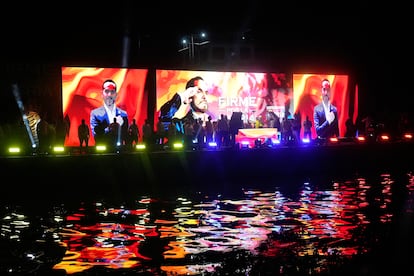
Digital strategies are woven around a narrative that sustains the messages. De la Espriella built a set of symbols that strengthen his patriotic epic and his slogan that his followers are “Defenders of the Homeland.” He incorporated the colors of the Colombian flag into his palette, highlighted on social media the military salute with which he ends his appearances, and emphasized the exclamation “Stand firm for the homeland!” Although he maintained that essence for over a year, he added elements to renew himself. He moved from a “confident, fierce tiger” to a populist message that contrasts “the usual suspects” with “the newcomers.” He ended up with the “Miracle Homeland”: the ideal Colombia in which the ideals of patriotism, a tough stance against criminals, and the defense of the traditional family will be instilled.
Cepeda, belatedly, sought his own symbols. The counterpart to the military salute is crossing the index fingers and thumbs to make a heart, borrowed from K-pop fans. The candidate and his supporters repeat it as a sign of allegiance. They have also popularized a jaguar, as a response to the far-right candidate’s tiger. The phrase “I’m running for life!” aims to sum up a commitment to the environment and human rights. The problem is that these symbols were developed in just a few weeks, compared with De la Espriella’s year-long run. Moreover, it was not a strategy designed by the campaign but something that emerged spontaneously among his grassroots supporters. Depending on who is making the assessment, this is either an asset or a weakness. The leftist candidate has shown pride in it. “In one way or another, Iván Cepeda wanted this to happen: that the people themselves would run the campaign […] There are thousands of us contributing ingenious ideas!!” reads a post on X that has been widely shared.
Sign up for our weekly newsletter to get more English-language news coverage from EL PAÍS USA Edition