

Julio thought that he had found his dream job. He was a driver for a wealthy family in Guadalajara, Mexico’s second-largest city.
At first, his tasks were simple: taking his employer to the beauty salon, shopping, or for tea with her friends. He dropped her children off at school and then took them to their English, piano and swimming lessons. But everything changed when he discovered that they were the wife and children of a drug trafficker. “I can’t get out of here,” Blanca Hernández recalls her son saying, when he confessed that organized crime had recruited him. “The boss has already started asking me to deliver packages,” he told her, horrified, back in 2016.
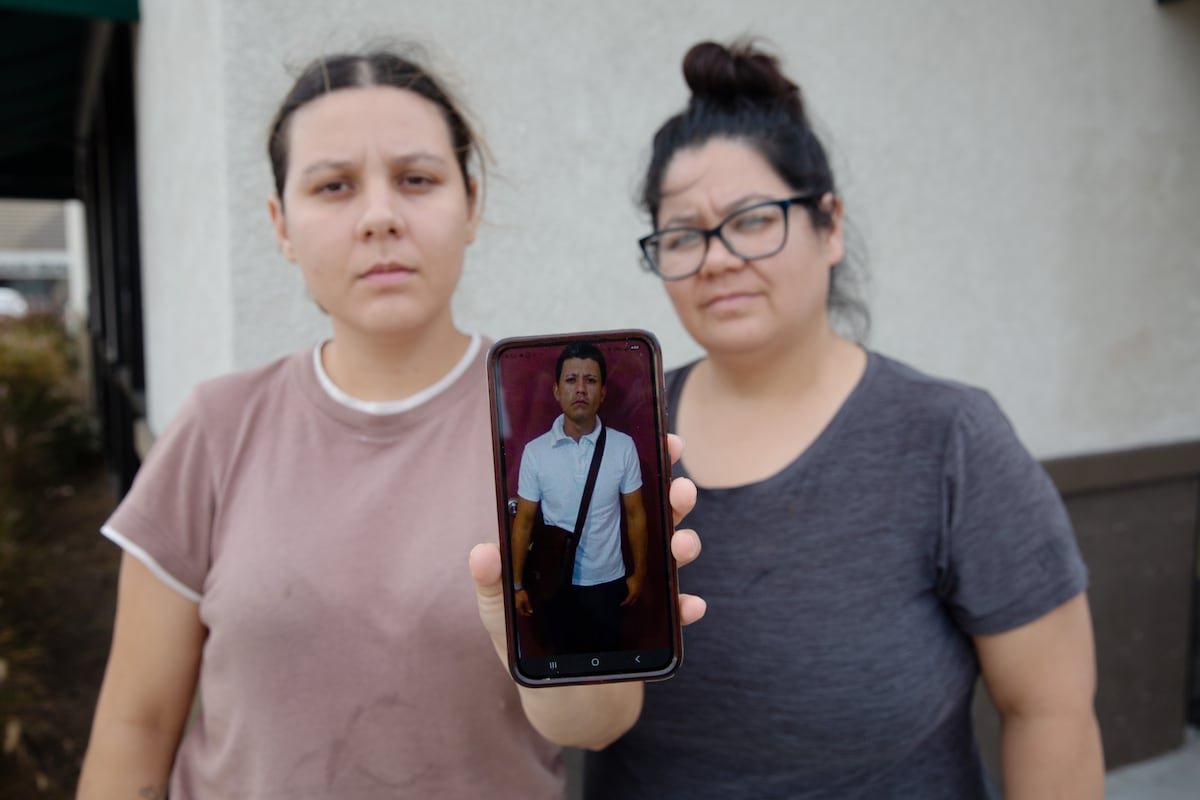
Ten years later, Julio Alfredo De Ávila Hernández is missing. And several of his relatives now live in the United States: they fled the state of Jalisco without imagining that, by seeking asylum, they would enter a legal labyrinth. Their case has become intertwined with the Trump administration’s harsh immigration policies, which mandate the transfer of asylum seekers to third countries deemed “safe.” This is in order to avoid forcing them to return to their countries of origin, where their lives would be in danger.
In April of 2026, an immigration judge presented options to Julio’s parents and siblings: they could continue their asylum process in Ecuador, Honduras, or Guatemala (in that order). They’ve since initiated an appeal process to try to remain in the United States. “They want to send us to Ecuador, but it’s worse than Mexico,” says Alondra De Ávila, Julio’s younger sister.
Back in 2024, she crossed the border with her son — now four years old — to surrender to immigration authorities and tell her story. “We want to stay here. I don’t want my son to experience what I went through,” the 26-year-old pleads.
Julio’s life in Mexico’s criminal underworld
The day Julio accepted the first package his boss handed him, he knew there would be more to come. When he refused to carry out one of the assignments, the threat was immediate. “He told me that, if I quit working for him, he would kill my family, my wife and my children,” recalls Blanca Hernández, 59, describing a conversation she had with her son.
She says Julio was forced to work for a cartel, and that there came a point when a hitman accompanied him everywhere. They knew where he lived, who his relatives were and what his daily routines looked like. By that point, Julio had no way out.
“He saw them making the cocaine bricks. At parties, my son said, instead of putting out bottles [of alcohol], they would put out a tray with just lines [of cocaine]. They started forcing him to do drugs. If he didn’t want to, they pulled out guns. My son started becoming addicted to drugs,” his mother recounts. “He told me that he had stopped visiting us for our own good, so as not to involve us in his life.”
Blanca’s fears came to pass in the early hours of April 5, 2017. Julio was 31 at the time. A phone call alerted her that something had happened at her son’s home in Tlajomulco de Zúñiga, 20 miles south of Guadalajara. When she arrived, she found a heartbreaking scene. “There were pieces of flesh, already dried. I believe they were my son’s. There was a lot of blood in both bedrooms and in the kitchen. I had never seen so much blood,” she recounts.
Some witnesses told her that, hours earlier, armed men had arrived, wearing what appeared to be police badges. They were traveling in two pickup trucks. “They took out a person [from the house], wrapped in a blanket. It looked like a dead body. They threw him in the truck. Then, they took out a woman and, finally, my son, covered in blood, semi-conscious,” she says.
The family sprang into action. They filed a complaint with the Jalisco Attorney General’s Office, called everyone they knew, plastered Julio’s photograph around the city, spoke to the media and even offered a reward for information that might help locate him. But their efforts had an unexpected consequence: they angered the cartel. Vehicles carrying hooded men armed with assault rifles began following them. Then came direct threats, first through anonymous phone calls.
“They told me that they were the ones who had taken Julio and that they wanted me to hand over what Julio owed them,” reads the statement that Blanca Hernández gave to the Jalisco State Police’s Investigative Division. “If I didn’t, they said that they would cut off my head,” she continues.
Two weeks after Julio’s disappearance, one of his sisters received a video call: she saw her brother being tortured.
“He was covered in blood. They had him tied up. They pulled his hair to lift up his head. My son was covered in bruises. His face was swollen from the punches and covered in blood. His white tank top was completely red with blood,” his mother describes.
That was the last time the family saw him alive. Some time later, a video began circulating on El Blog del Narco, a website that publishes uncensored content related to organized crime in Mexico, showing a horrific act. This is how Jéssica, Julio’s younger sister, describes it: “They were cutting off his hand, from the wrist down. The police in Mexico showed us that video.” The family was able to identify him by a tattoo with his daughter’s name on one of his forearms.
Persecution in Mexico
The cartel made it clear that its threats were serious when several gunmen showed up at the family’s home. They pounded on the door and demanded that Julio’s mother hand over “what Julio had left behind,” according to her statement to investigators. “I couldn’t even speak; I was so scared,” she recounted.
The harassment soon spread to their workplaces and the streets of their neighborhood. One afternoon, the gunmen did not even hesitate to approach two of Julio’s sisters as they were accompanied by small children. “We grabbed the baby from the stroller and ran,” Alondra De Ávila recalls. “When we got home, we locked everything up. We put the sofas in the doorways.”
As soon as they had the chance, they fled to the Guadalajara airport, considering it to be the safest place in the city. Thus began a long journey, passing through the homes of relatives in the states of Jalisco, Aguascalientes and Baja California.
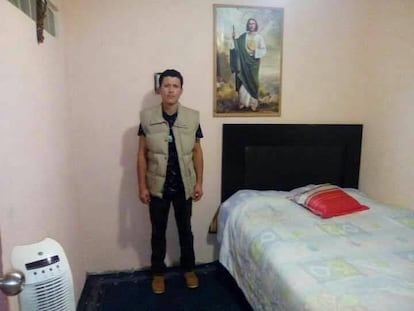
Blanca Hernández lost all hope of finding her son alive the day she spoke with someone connected to drug trafficking. “He told me, ‘Please, ma’am, don’t look for him anymore. You’re in grave danger. They’re going to kill you all.’”
Officially, Julio is one of the approximately 135,000 missing persons in Mexico, a crisis that has reached record numbers in recent years (with organized crime playing a central role). Only a year ago, this family laments, the Jalisco State Attorney General’s Office issued its first missing person report for Julio. “My brother became just another missing person, but for us, he will always be our family member,” Jessica says.
“It’s all been very hard”
The family fled to Tijuana, but even there, they didn’t feel safe. In 2024, they decided to cross into the United States to surrender to the Border Patrol. They all passed the first hurdle in their asylum application: the credible fear interview. Afterward, they remained in immigration custody — some for days, others for months — until they were released and able to reach their destination.
The process continued. They began to get settled in the United States, like so many other migrants. They attended hearings, confident that they had enough evidence to win their case. They even had copies of the complaints they had filed in Mexico. But on April 13, 2026, the family received a devastating blow: an immigration judge granted the government’s request to close their asylum application and denied them protections against deportation. She ordered that they be sent to Ecuador or, failing that, to Honduras. Guatemala was left as a third option.
These three nations have cooperation agreements with the Trump administration, functioning as “safe third countries,” meaning they receive migrants and process their asylum claims there. Human rights and immigrant advocacy groups, however, have questioned whether they genuinely meet the protection standards required under U.S. law. The agreements were initially signed during Trump’s first term, but were suspended during Joe Biden’s presidency. Trump reactivated them after returning to the White House. In the case of Ecuador, the agreement came back into force in July, 2025.
“It’s all been very hard,” Blanca Hernández laments. “I told the judge that we were in grave danger in Mexico, but that, between going to Ecuador or returning to Mexico, I’d rather die in Mexico.” She adds: “It’s not right that, just because of a mistake my eldest son made, more people are going to die. I am asking the U.S. government to give us a chance. We’re not bad people. We didn’t come here to steal. We didn’t come here to take anything from you.”
Her daughter, Alondra De Ávila, agrees that, if they’re deported to their home country, “we would have to live in hiding; there’s nowhere safe for us there.”
Their appeal against the immigration judge’s ruling has given them a glimmer of hope. The family is determined to pursue the legal fight through every possible level of appeal. “My family isn’t asking for money. We just want to be allowed to stay in this country,” Jessica insists. “It’s unjust to deny us that protection.”
Sign up for our weekly newsletter to get more English-language news coverage from EL PAÍS USA Edition