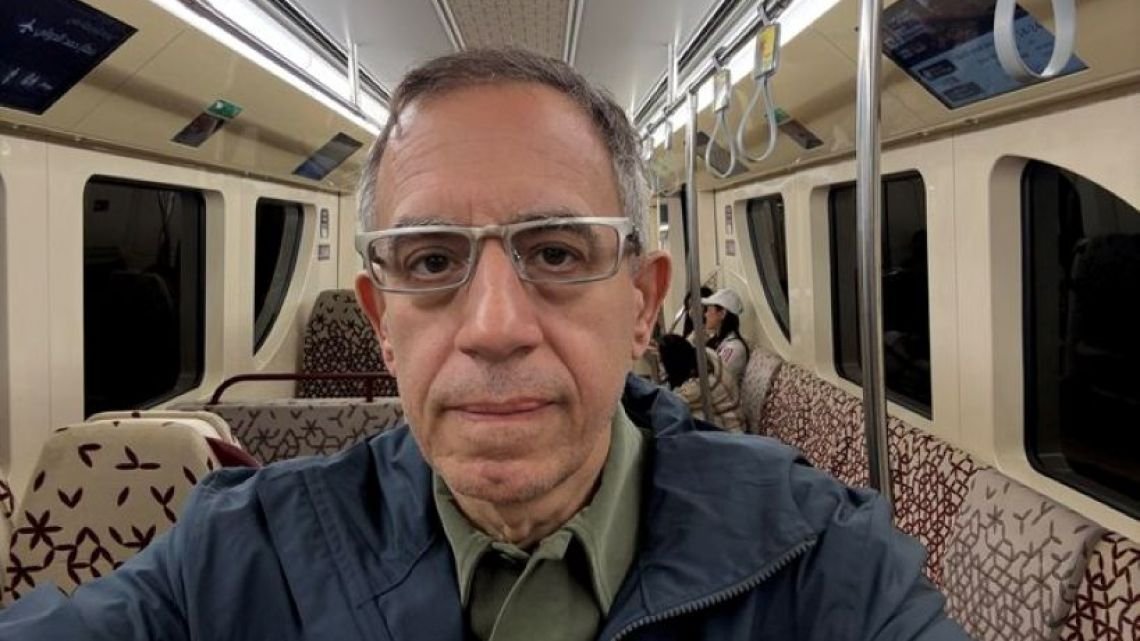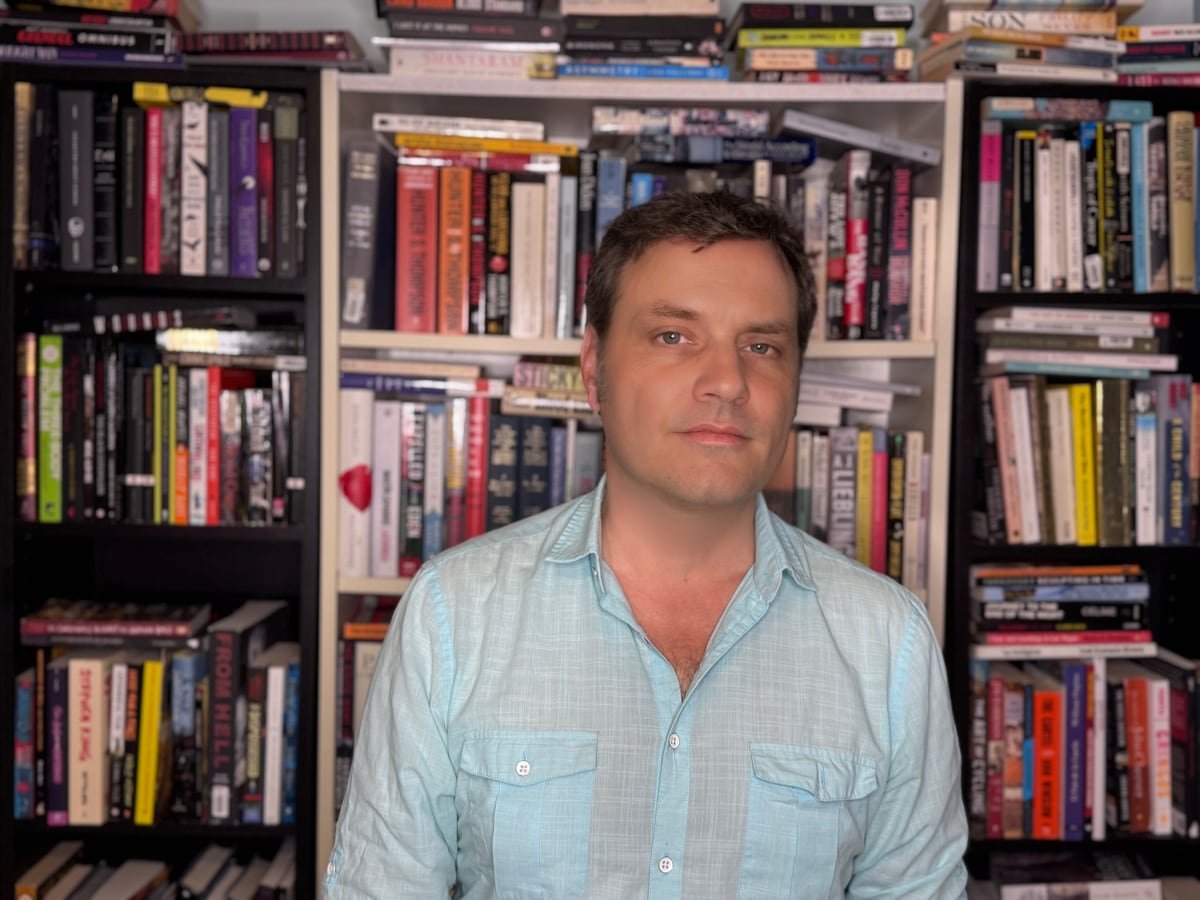
British-American writer and journalist Toby Muse has immersed himself in the underworld of drugs for more than 15 years. He has infiltrated narcotics labs and traveled through guerrilla camps in the Colombian jungle, in order to understand the aspirations and deprivations that drive thousands of people into the trafficking networks. Through his work, the 50-year-old – born in Chichester, United Kingdom – dismantles the failed promises of the war on drugs, while offering a stark portrait of the global cocaine empire.
“I didn’t want to tell the same old story,” Muse explains, via video call from Bogotá. “I think the emotions are what tells the real story. And I wanted to do a book about the emotions of cocaine, about the feelings of cocaine. What does the novia (girlfriend) of a Sicario feel? What does the widow of a narco [feel]?” The result was Kilo: Life and Death Inside the Secret World of the Cocaine Cartels (2021). Six years after its initial publication, the book is now also out in Spanish.
Drug lords fall and new bosses emerge. Governments come and go. And blood stains the streets red in Sinaloa and Medellín. But no matter what, cocaine remains universal. It corrupts politicians and police officers, fuels the insatiable appetite of Wall Street stockbrokers and London nightclubs, moves billions through European ports and confronts countries like Ecuador with an abyss that – until just a few years ago – was unimaginable. These are compelling reasons to return to the pages of Kilo, which narrates the journey of a silent protagonist: a bundle of cocaine. The narrative begins with its departure from the impoverished fields of Colombia, until it reaches the final consumers.
Question. The war on drugs has been going on for more than five decades. And yet, there’s more cocaine than ever. How did we get to this point?
Answer. We’re in the golden age of cocaine right now. Pablo Escobar couldn’t imagine this much cocaine. Production is concentrated in three countries: Colombia, Bolivia and Peru. Colombia, for about the last 10 to 12 years, has broken a new record every year.
One of the main reasons behind this is the peace process with the FARC in 2016. In many of the guerrilla-controlled territories, there were coca crops. When the FARC handed over their weapons, the deal was that the government would take those territories and establish law and order in return. But the government simply didn’t do it. It couldn’t. That’s why I believe — and I know many people don’t like to hear this — that the peace process was a failure. It wasn’t supposed to just mean peace between the government and the FARC, but rather peace for everyone in Colombia. And that, clearly, didn’t happen.
When the FARC laid down their weapons and gave the territory over, all of the other illegal groups flooded into the zones to take over [coca leaf production], and demanding that the campesinos (the peasants) plant more.
Every time I speak to the cocaleros, [I’m surprised by] the amount of them who are sick of the business. They want out. They hate the business now, because it doesn’t even bring them that much money. And now they have to live under the law of these armed groups. And this is what happens, because cocaine always brings violence. If you grow coffee, you don’t have to live with violence. But with cocaine, violence is always there. If the government were to present them with a coherent plan, an alternative, I’m sure they would stop cultivating coca.
I think it’s relevant that the world asks Colombia why it’s producing so much cocaine. It’s a completely legitimate question. But Colombia can also ask the rest of the world: “Why are you consuming so much cocaine?” Colombia produces cocaine because richer countries consume [it]. And yet, we don’t even talk about consumption. In England, who talks about why we consume cocaine? No one. [And] London is one of the centers of cocaine consumption. I never hear a Londoner ask that question
Q. The war on drugs has also created its heroes and villains. Do you think that Colombia is being treated as a scapegoat?
A. Yes, absolutely. It takes two to tango. Colombia produces drugs because people in the United States, which is the biggest market, consume drugs. Europe consumes drugs. Cocaine is capitalism: it’s [now scoping] out new markets in Asia.
Colombia is always portrayed as the villain. There’s a racist component, possibly, in how South Americans are viewed. And I think it’s unfortunate, because we’re all responsible for this. But I also think that there’s a bit of a pendulum swing. Sometimes, the end users are blamed for everything… and I don’t agree with that, either. When we think about the Prohibition years in the 1920s and 1930s, the real villains weren’t the people having a drink, but those who created these absurd laws.
Q. Who pays the highest price in this war?
A. Colombia has this never-ending supply of young men, [and] also young women, to a lesser degree, who are thrown to the frontlines to just die in this pointless war machine where, you know, they’re trained as a sicario (an assassin) at 15 or 16. They don’t live to be 25. It’s an extraordinarily nihilistic life. It’s fast money. [You say to yourself], “I want an actress girlfriend and I will never see 30.” In the best case scenario, [a cartel member] might leave some money behind for their wives or children.
But I think we all pay. If you look at the data in the United States, more than 100,000 people died from overdoses in a single year. That’s more than [all the Americans who] died in Iraq and Afghanistan. The police are also getting even greater power to snoop, because of drug policy-related laws. I think that the war on drugs does none of us any good.
Q. Are governments and politicians primarily responsible for this failure?
A. We all share some of the responsibility. We keep implementing the same policies… and that hasn’t been a very smart decision. But I think we also just don’t know what to do. We’re stuck in this thing where the war on drugs is obviously not working, but I don’t think we’re ready for legalization, either. So, we just keep doing the same thing over and over again. Politicians don’t do anything until they’re pressured. But certainly no one is pressuring Donald Trump to stop the war on drugs in South America. No, in fact, he’s escalating the war on drugs here in this region.
Q. What effect has Trump’s return to the White House had on the fight against the cartels?
A. There is immense pressure on Latin American governments. In the case of Mexico, it’s very clear that he’s asking the authorities to do more. Ecuador, on the other hand, seems much more inclined to accept U.S. resources in its fight against the cartels and criminal gangs. We’ll have to see what comes of that. Trump promised the same for Colombia… but that’s going to depend on who wins the presidential election that’s coming up.
Then, you have Venezuela. Venezuela is an interesting question, because the whole thing was framed in the terms of the war on drugs. You saw this merging of the war on terror and the war on drugs in Venezuela. And [the Trump administration] was talking about the Cartel de los Soles (the Cartel of the Suns). It was everywhere. Then, [Trump] took Venezuela, he took Maduro. And now, America’s basically helping to run Venezuela. And we never hear anything more about this cartel. [This isn’t meant to] minimize [that] Venezuela had clearly become an important transit point for cocaine, especially on its way to Europe. And then, you have the question of these bombings, of these boats – if every one of these boats [was actually] carrying cocaine. That’s the first question to ask. And we just don’t have an answer to that. But even if they were, you cannot just kill someone who is carrying out an illegal act. [The proper thing to do is] arrest them. You put them in front of a court. They [need to be] judged to be guilty.
Q. Cocaine usage has skyrocketed in Europe. Is it possible that, in the future, the violence will reach the same levels as in Latin America?
A. No, not the same levels, but I think a wave of violence [is coming in] Europe. Cocaine always follows a cycle. At the beginning, it’s always a golden age. And there’s no reason to fight, because everyone’s making enough money. [But] then, there comes a moment when the [cartels] get tired of sharing. They’re now so powerful: they can recruit more men and women, they can buy better guns. And then, they’re like, why are we sharing?
I think Europe is at the stage now where everyone’s making so much money. Could you imagine how much those mafias in Barcelona, Madrid [and] London are making? What are they doing with their money? [Well], they’re becoming stronger. You can see the situation in Rotterdam is incredibly out of control: I think the real level of corruption in those port systems is through the roof. You can see that there are teenage sicarios in places like Marseille. You’ve got hardened fighters coming out of Eastern Europe, places like Ukraine and Russia. You’ve got the recipe for something very, very, very ugly to happen. This is what I fear… and Europe is completely [unprepared] for this.
I think Europe’s going to have this moment when it’s going to wake up and say, “we let this problem get far too big.”
Sign up for our weekly newsletter to get more English-language news coverage from EL PAÍS USA Edition