Since humans developed the ability to study DNA extracted from fossils, we have uncovered a mystery that until now had no answer. In the DNA of some human species, including our own, Homo sapiens, there were “super-archaic” markers, vestiges of older, unknown species with which we had interbred and produced offspring. Unable to determine who these genomic intruders were, some scientists called them ghost populations.
A study published on Wednesday provides the first molecular evidence of interbreeding between human species — a concept that would have been unthinkable just a few decades ago — showing that the human evolutionary tree is porous. This means that, although each known human species is a unique adaptation to its environment, we nonetheless retained the ability to reproduce and interbreed, perhaps even giving rise to another group or species better suited to its surroundings.
Researchers in China have analysed proteins from the tooth enamel of six fossils dating back around 400,000 years — five men and one woman — found at sites across much of the country from north to south. They were able to recover two proteins, and one of them — the M273V variant of the enamel protein ameloblastin — is key. The results show that this protein is present in all the fossils analyzed, which belonged to our ancestor Homo erectus. The same compound had previously been identified in the teeth of another human group, the Denisovans — close relatives of Neanderthals, themselves the species most closely related to our own.
The finding implies that, at some point around 400,000 years ago, Homo erectus, which originated in Africa, and the Denisovans, a human population adapted to Eurasia, encountered one another, had sex, and produced fertile offspring. It is the oldest known episode of interbreeding between human groups, and the first to feature Homo erectus, a species that until recently had been largely overlooked. The results were published on Wednesday in Nature.
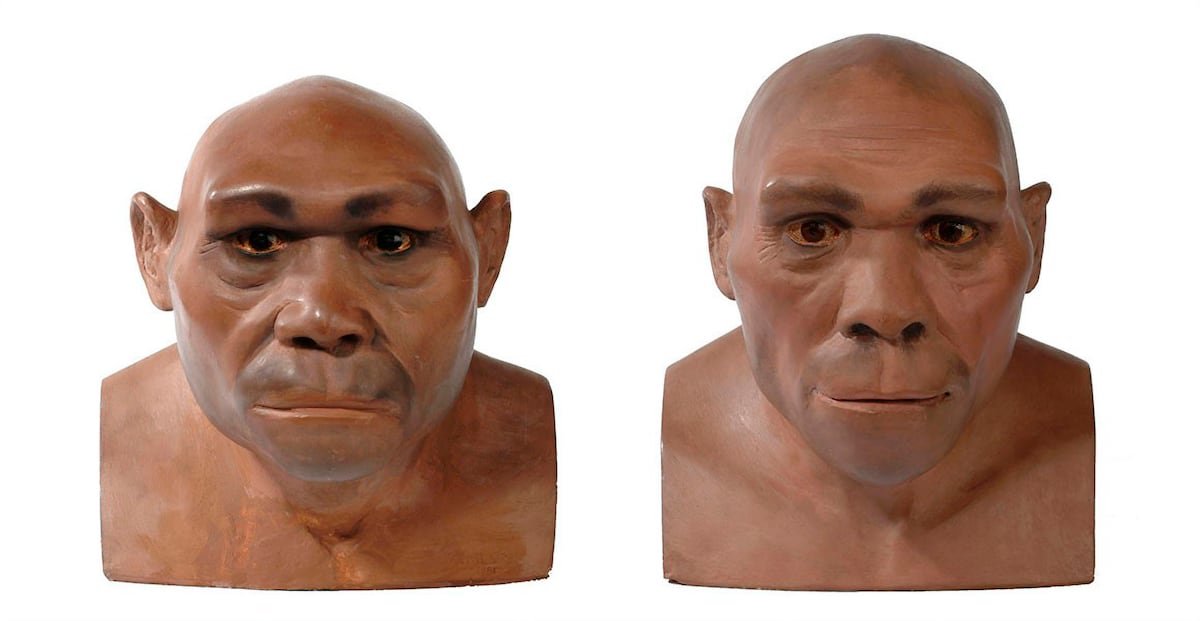
Homo erectus was the first human to walk fully upright in a way very similar to us. It emerged in Africa around two million years ago, but its already sizeable brain, its ability to make tools, and its agile two-legged gait allowed it to become the first human species to leave its African cradle. Homo erectus spread into Asia and Oceania and, in some places, survived until as recently as 100,000 years ago, making it the longest-lasting human species — by comparison, Homo sapiens have existed for only about 200,000 years.
Although we already knew that modern humans descend from Homo erectus, and that this species was the leading candidate behind the so-called “super-archaic introgressions” in our genome, this is the first conclusive proof. The new evidence adds to what was already known: that Homo sapiens interbred with Neanderthals, who left up to 4% of their DNA in us; and that Neanderthals interbred with Denisovans. Homo sapiens did the same, leaving Denisovan DNA in some present-day populations, with invaluable genetic legacies — such as the traits that allow humans to live at extreme altitudes, including the Himalayas.
Neanderthals, in turn, passed on genetic variants that helped us withstand the cold, strengthened our immune systems, and increased our susceptibility to certain mental disorders, including depression. The tree of human evolution does not change its shape, but at times its branches touch — and even merge.
The new study also reveals a second dental protein that appears to be unique to Homo erectus, a new genetic marker for identifying this species. After the indisputable prominence of Neanderthals at the centre of human evolution research in recent years, Homo erectus could now emerge as the new key player in the search for our origins.
That is the view of paleoanthropologist Antonio Rosas, who was not involved in the study and highlights its significance. “This study confirms what we already suspected, but for the first time with molecular data,” he says. “The work reveals two enamel proteins: one unique to Homo erectus, and another shared with the Denisovans — especially the later ones [the more recent populations] — which is evidence of hybridization. The Denisovans later interbred with Homo sapiens, which is why some modern populations, such as Filipinos, carry Homo erectus DNA. In Africa, we also assume there are people who carry super-archaic DNA that should come from Homo erectus, and which will very likely come to light.”
Rosas underlines the importance of this species in human evolution. “It is the species with the longest history, the longest-lived, and there is still much we don’t know about it. It is very important to obtain more data. It will probably become more important now than Neanderthals and Denisovans thanks to new molecular data,” he concludes.
Geneticist Carles Lalueza-Fox agrees with this assessment: “The pattern of interbreeding is repeated, although this is the first one described from paleoproteomics [the study of ancient proteins preserved in fossil remains],” he writes in a message exchange.
Sign up for our weekly newsletter to get more English-language news coverage from EL PAÍS USA Edition