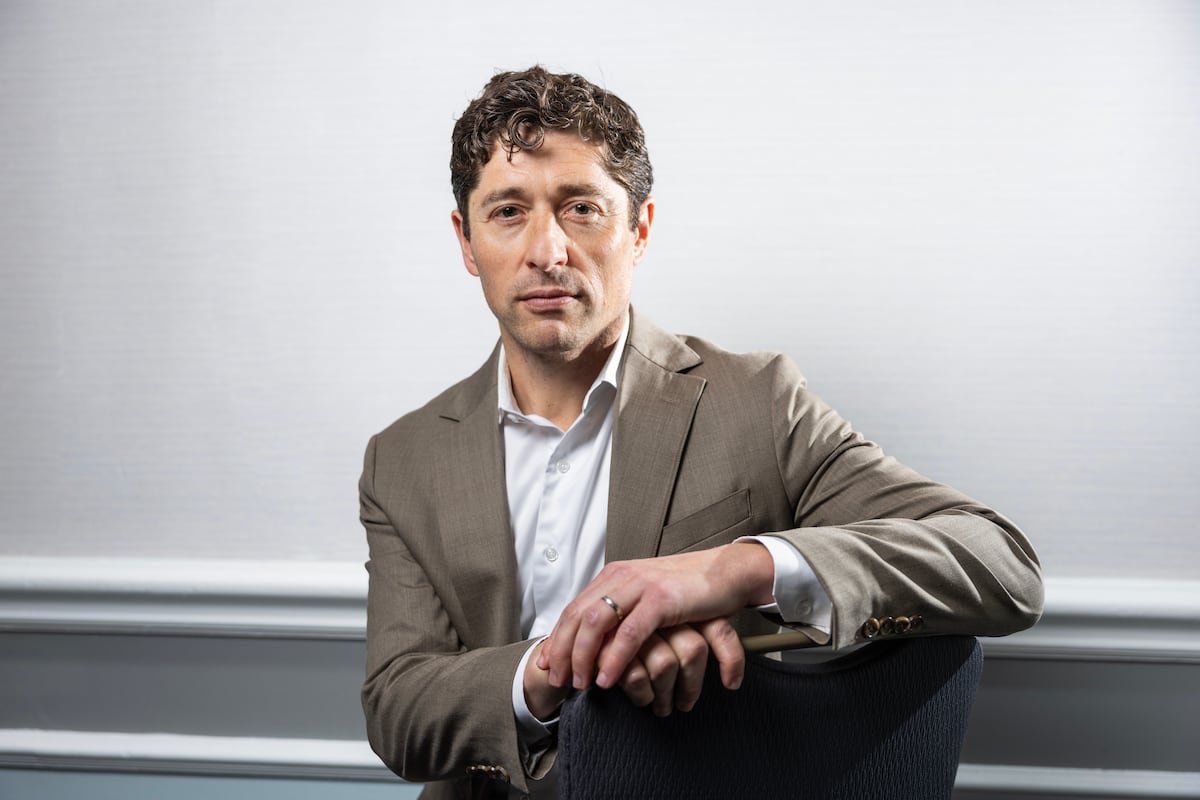
Six months ago, Jacob Frey, 44, went from being mayor of Minneapolis to governing an occupied city. Between 3,000 and 4,000 agents from Immigration and Customs Enforcement (ICE), dispatched by Donald Trump, descended on the state of Minnesota in December of 2025. This was under the pretext of combating fraud within the burgeoning local Somali community.
The ICE agents were tasked with fulfilling a promise that secured the president’s return to the White House: to complete the “largest deportation program in U.S. history.” Thus, in the depths of a harsh winter, Mayor Frey became one of the symbols of resistance for a community that lost two of its members: Renee Nicole Good and Alex Pretti.
Both individuals — a poet and a nurse respectively — were shot dead by what the mayor calls an “occupying force,” if not something worse. “ICE is nothing more than Trump’s police,” Frey clarified a couple of weeks ago, in Washington, D.C., during an interview with EL PAÍS. He grew up just across the Potomac River, in Arlington, Virginia.
“There’s a historical analogy here, which is the SS. The [Nazi] SS was unaccountable to the parliament: they answered only to [Adolf Hitler]. ICE largely [doesn’t] need approval from the congressional body; it’s very much Donald Trump’s [police force] and, similar to the SS, it’s used in our streets to terrorize people extensively.”
Frey — who made headlines during the siege by telling those federal agents to “get the fuck out of Minneapolis” — traveled to the U.S. capital this past May 19 to participate in a meeting sponsored by the Center for American Progress, a progressive think tank that brought together the main leaders of the Democratic Party at a hotel in the city. The trauma in Minnesota has made the mayor one of these leaders: during those winter days, with temperatures dropping below 0°F, he saw his profile rise to global prominence.
Although he was re-elected last November, he denies any intention of making the leap to national politics: “My plans are to continue in the City Hall,” Frey affirms.
Nevertheless, he has become an example for his peers: mayors from all over the country called him during those weeks, seeking advice on how best to resist if their cities were next on Trump’s list. “I told them: ‘Be very upfront and straight with the people of your city from the beginning.’ Tell them what they can expect, tell them where their local government can help… and also tell them [when] we just don’t have the authority or the ability,” he recalls.
Frey, who moved to Minnesota’s most populous city in 2006, after running a marathon there as a professional distance runner, took all these steps during the crisis. And, after Pretti’s murder, two demonstrations of up to 50,000 people and Bruce Springsteen’s musical contribution (he wrote a protest song titled Streets of Minneapolis), Frey and his constituents forced the Trump administration to back down. ICE and Border Patrol agents withdrew. Today, according to the mayor’s estimates, there are “between 300 and 400” agents in the city… a number “similar” to before Operation Metro Surge.
“I think the people of Minneapolis stopped this administration in its tracks. [The Trump White House] wanted to try to create a national narrative around chaos in Democratic-run cities and states… but the narrative that was created instead was about a horribly abusive federal administration,” he says. “I think the danger of a new invasion still exists. My hope is that they’ll think twice, because this was so disastrous for them politically.”
Whistles and social media
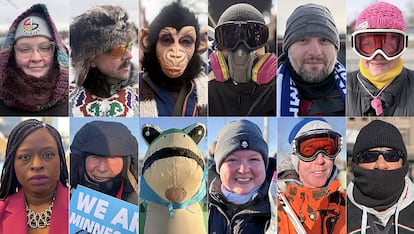
The image that went viral was that of Minneapolis (and its twin city, St. Paul) standing up against this abuse of power. It showed people who, armed with whistles and cell phones, organized through social media and defended immigrant communities.
“They aren’t strangers to us. They’re our family and friends; they’re the people who have made Minneapolis what it is today. It’s on all of us to stand up for them,” Frey notes. He also mentions that he wasn’t surprised by his neighbors’ reaction, because there’s “a strong sense of community” in the city.
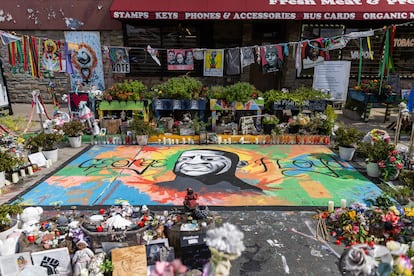
The death of George Floyd — an African American Minneapolis resident killed by asphyxiation at the hands of a white police officer named Derek Chauvin — also served to pave the way for this sense of community. In May of 2020, with the city on fire for days, Frey, who has been mayor since 2018, was thrust into the spotlight… although the glare wasn’t always favorable.
On the day of Floyd’s funeral, Frey was the subject of a scene that went viral: he knelt before the casket, weeping, wearing a mask that read “I can’t breathe” — the words that the victim had uttered before dying. However, two days later, hundreds of people booed the mayor when he answered “no” to the question of whether he advocated for abolishing the police.
During the riots this past winter, local police officers — who, back in 2020, were the enemy of Minneapolis residents — became part of the resistance against ICE (whose deployment at one point outnumbered local law enforcement five to one). Brian O’Hara, who also had his 15 minutes of fame, was in charge of the police force. He resigned a week ago, accused of sexual harassment in the workplace. Frey has been criticized for having wanted the police chief to stay on.
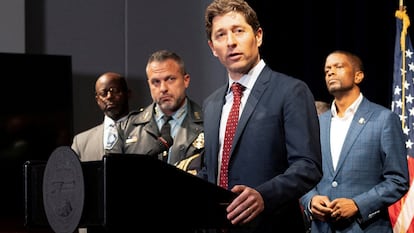
This isn’t the mayor’s only problem: during the occupation of Minneapolis, the Trump administration announced that it was investigating him for not cooperating with federal forces. In his interview with EL PAÍS, Frey argues that the White House is “weaponizing the Justice Department” against him and “other elected officials.”
“It’s deeply concerning that this department, which is supposed to be a mainstay of justice, would be used in this way,” he sighs. When asked about the status of those investigations, he responds with an apology: “I can’t talk about, you know, the specific facts… but what I’ll say is that it’s a horrific misuse of [power]. But they won’t intimidate me.”
Regarding the prospect of the U.S. president using ICE to influence the midterm elections in November, the mayor is confident they will be “free and fair,” although he remains “vigilant.”
During his interview with EL PAÍS, the mayor responds to what took place just after Alex Pretti’s murder, when then-attorney general Pam Bondi demanded access to Minnesota’s voter rolls. “They were trying to make a deal,” the mayor recalls. “They were trying to say, ‘turn over the voter registration records and we’ll leave.’ It’s crazy that they said that threat out loud.”
Bondi is no longer part of Trump’s cabinet. Greg Bovino — the Border Patrol commander who became a symbol of the administration’s violent tactics — was given a farewell by Minneapolis residents on the night of his departure, with a protest outside his hotel. And Kristi Noem — then-secretary of Homeland Security — also fell victim to the image crisis triggered by the intervention in Minnesota. Frey, however, doesn’t consider these dismissals enough to feel triumphant.
“There’s no claiming victory when you [have] people that got killed (Good and Pretti) and shot (Julio César Sosa-Celis). I’ve never been more proud to be from Minneapolis, to be the mayor… but look, people still are grieving.”
Six months after leading an occupied city, the mayor feels that Minneapolis is “coming back.” He also feels that he can now dedicate himself to tasks which are more appropriate to his office, such as promoting the city’s attractions.
“For anybody wondering how they can stand up for the tens of thousands of residents that were out there peacefully protesting — [or] how they can support the immigrant community that [was] disproportionately targeted — one of the big ways is to come to Minneapolis. We would love to have you. Go buy some tacos, or some sambusa. Buy a beautiful dress on East Lake Street. It’s a beautiful city: [there are] tons of lakes. And the Mississippi River runs right through it. Come out and have a little vacation!”
Summertime — as well as the fact that Minneapolis isn’t on a war footing or buried under a foot of snow — certainly makes this invitation more appealing.
Sign up for our weekly newsletter to get more English-language news coverage from EL PAÍS USA Edition