


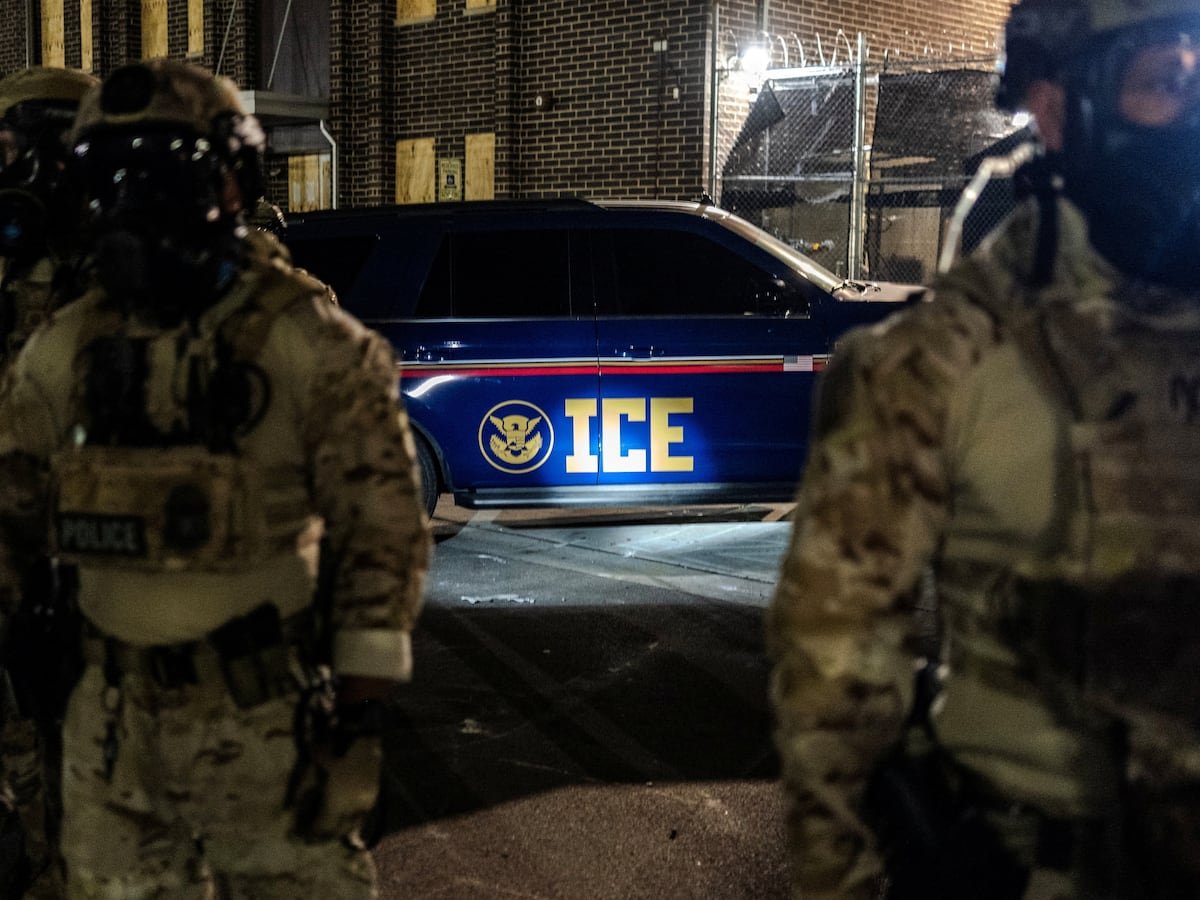
Humberto Castro, a 59-year-old Venezuelan, was driving to work as usual from his home in Doral, where he has lived for eight years, when he was detained by agents from U.S. Immigration and Customs Enforcement (ICE).
“My dad has a work permit valid until 2030. His asylum case is pending. He was on his way to work, driving normally, and they pulled him over and handcuffed him,” said his daughter, Arianna Castro, 29. Her father arrived in the U.S. on a visa and has an asylum application pending, she said. He has no criminal record.
Castro’s case comes amid a wave of immigrant arrests in South Florida that has alarmed the Venezuelan community, which is the largest in the United States. Now, with just three months to go before the midterm elections, they are demanding answers and concrete measures from their congressional representatives.
Two leading exile organizations, Venezuelans Persecuted for Political Reasons in Exile (Veppex) and the multicultural activists group Voice and Expression (Amavex), have prepared a report they sent to members of Congress asking for an investigation into the detentions of Venezuelans with pending asylum claims and other immigration cases.
The report says that Venezuelans in the United States have been affected by the rollback of temporary and humanitarian protections, and that people with pending asylum claims and other immigration cases are being detained for deportation, including to distant third countries such as Liberia. It also notes that the authorities do not publish data on how many detained Venezuelans have criminal records or pending immigration proceedings.
As a point of reference, the report notes that as of July, about 65,765 people were in ICE custody, more than 70% of whom had no criminal record. It also documents at least three cases of Venezuelans detained between July and August despite having work authorization and pending asylum claims.
Helen Villalonga, president of Amavex, says the Trump administration’s immigration policies have “brutally harmed” the community.
Nearly half the population of Doral, a city in Miami-Dade County, is Venezuelan. Last year, the city entered into a 287(g) agreement to cooperate with federal immigration authorities.
Much of South Florida’s Venezuelan community supported Donald Trump in the last election, expecting that he would increase pressure on Nicolás Maduro’s regime in Venezuela and that the mass deportation campaign he promised would target criminals and people with ties to Chavismo, Villalonga says. Now, she adds, even Venezuelans with links to the Republican Party have called her after the report’s publication to say: “This isn’t what we voted for. This isn’t what we were expecting.”
Villalonga says the report is intended to put pressure on South Florida lawmakers ahead of the November elections. While some legislators have expressed sympathy for the plight of Venezuelans, she argues that this has yet to translate into meaningful solutions, and the report calls for concrete results. According to Villalonga, none of the lawmakers have acknowledged receiving the document since it was sent to them.
“We are tired of [lawmakers] issuing statements on social media or sending a letter. What we need are immediate actions in Congress, actions within the Department of Homeland Security, within the State Department,” she said.
The report calls on Congress to hold oversight hearings on the detention of Venezuelans and to require DHS and ICE to publish data on detainees’ nationalities, criminal records and pending immigration cases. It also calls for a Government Accountability Office (GAO) audit of arrests carried out at airports. In addition, it urges DHS and U.S. Citizenship and Immigration Services (USCIS) to review cases individually and pursue alternatives to detention for people with no criminal record who are complying with their immigration proceedings.
“It seems the administration has done the opposite of everything we have been asking for,” said José Antonio Colina, president of Veppex. “We agree that the government should enforce U.S. immigration laws, which seems reasonable. What we do not agree with is trying to criminalize Venezuelan immigration.”
The administration has taken actions that have left many people without legal status, Colina says. “Many who applied for political asylum are now being detained because that is not a status.”
In his view, lawmakers “have to move from rhetoric to action, because the facts and the actions show they have been neither forceful nor consistent.”
“I personally believe they [South Florida lawmakers] have no influence within the White House at the moment. They are not being heard,” he said. Representatives María Elvira Salazar, Carlos Giménez and Mario Díaz‑Balart, all Republicans, did not respond to requests for comment for this report. DHS did not respond either.
Democratic Congresswoman Debbie Wasserman Schultz told EL PAÍS that she is “deeply concerned by ICE’s recent push to arrest Venezuelans, Haitians and other law‑abiding immigrants at airports” and that she has contacted DHS about several issues related to ICE, “including the increase in its operations at airports and in our communities,” but so far has not received a concrete response.
Wasserman Schultz’s office added that several reports “have shown an increase in ICE activity at airports, and not only against Venezuelans.”
However, it noted that for the GAO to open an investigation, the request must come from “senior congressional leaders or the chairs or ranking minority members of committees or subcommittees with jurisdiction” over the issue. “Otherwise, requests are often rejected or go unanswered. The congresswoman does not fall into any of those categories when it comes to ICE oversight, but she is exploring the options available to her to push for an investigation and stronger oversight,” it said.
The issue puts the spotlight on two Miami lawmakers with oversight roles in Congress: Giménez, who chairs the Homeland Security subcommittee responsible for airport security, and Salazar, who chairs the House Foreign Affairs Subcommittee on the Western Hemisphere, which has jurisdiction over relations with Latin America.
Since January of last year, at the start of Trump’s second term, then Homeland Security secretary Kristi Noem revoked Temporary Protected Status (TPS) protections for Venezuelans that the Biden administration had extended through October 2026, as well as humanitarian programs. DHS later terminated the 2021 and 2023 TPS designations.
More recently, the anti‑immigrant offensive has expanded to people with pending asylum cases who had been allowed to hold work permits. ICE agents are now detaining people whose asylum claims remain pending but whose visas have expired. DHS has also allowed certain asylum cases to be referred directly to immigration courts without an interview with USCIS.
Last year, the three Republican lawmakers from South Florida called for Venezuelans with no criminal record who had fled persecution under Maduro to be treated differently, and pledged to “do everything possible” to protect them. In January, Giménez urged Noem to adopt a “case-by-case solution” for exiles, while Salazar backed bipartisan legislation to grant TPS protections to “law-abiding” Venezuelans. In March, Salazar again called for protections for Venezuelans.
Maduro was captured in January in a U.S. military operation and is being held in New York awaiting trial. His vice president, Delcy Rodríguez, is acting as interim leader. The U.S. and Venezuela restored diplomatic relations in March, and last Friday, President Trump announced an agreement under which the United States will take control of 65 billion barrels of Venezuelan oil reserves, more than double U.S. reserves.
Meanwhile, Arianna Castro says her father is being held at ICE offices in Miramar, north of Miami, and she is trying to secure his release on bond. “It feels totally unreal. We came here seeking a better life and all we have done is work, build a life here and contribute to the community,” she said. “My sister graduated from college; I also graduated; I’m a nurse. Now my husband doesn’t want me to leave the house. It’s strange to return to that fear we once had in Venezuela, that we couldn’t go out because we would be persecuted. You can’t live like that.”
Sign up for our weekly newsletter to get more English-language news coverage from EL PAÍS USA Edition