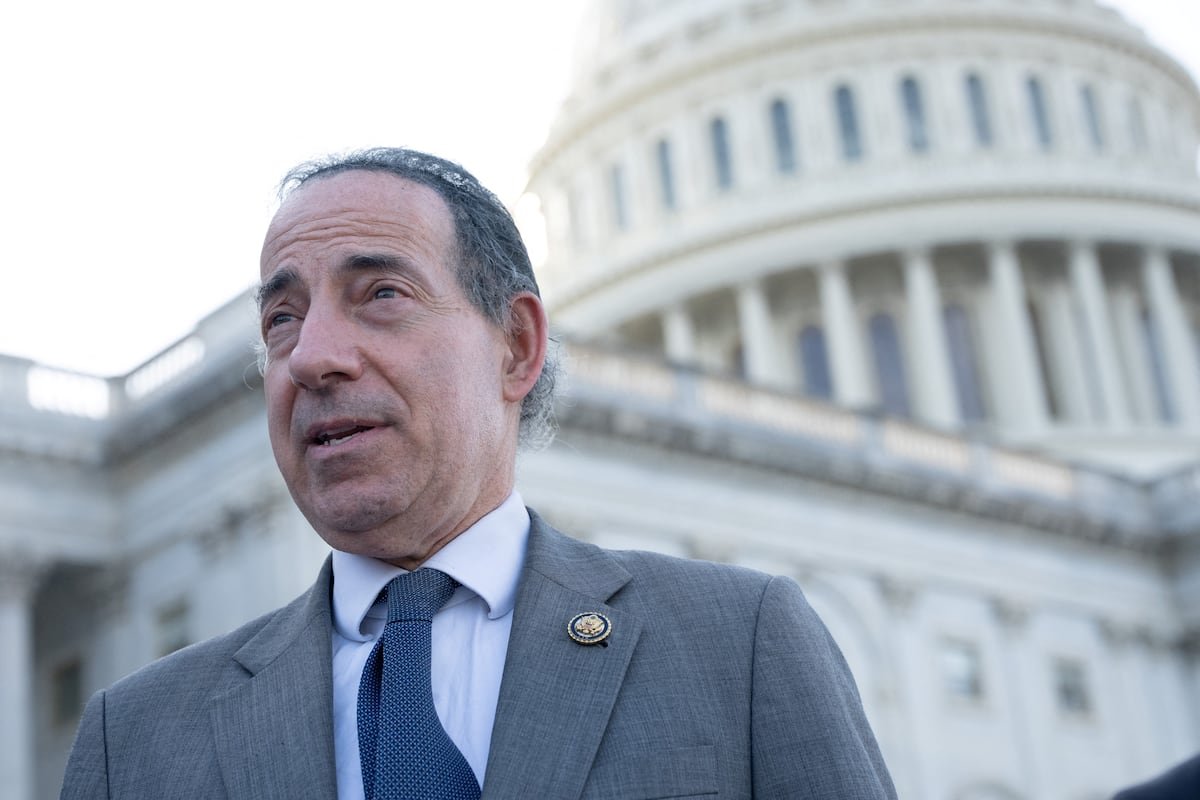
On June 9, 2022, the day of the first hearing of the congressional committee in charge of investigating the U.S. Capitol attack, one of its members, the Democratic congressman Jamie Raskin, was there with a copy of Common Sense, by the philosopher and great debater Thomas Paine. “I carry it with me often, and return to it frequently during these dark days,” said Raskin, a representative for Maryland, in a conversation with EL PAÍS on Thursday.
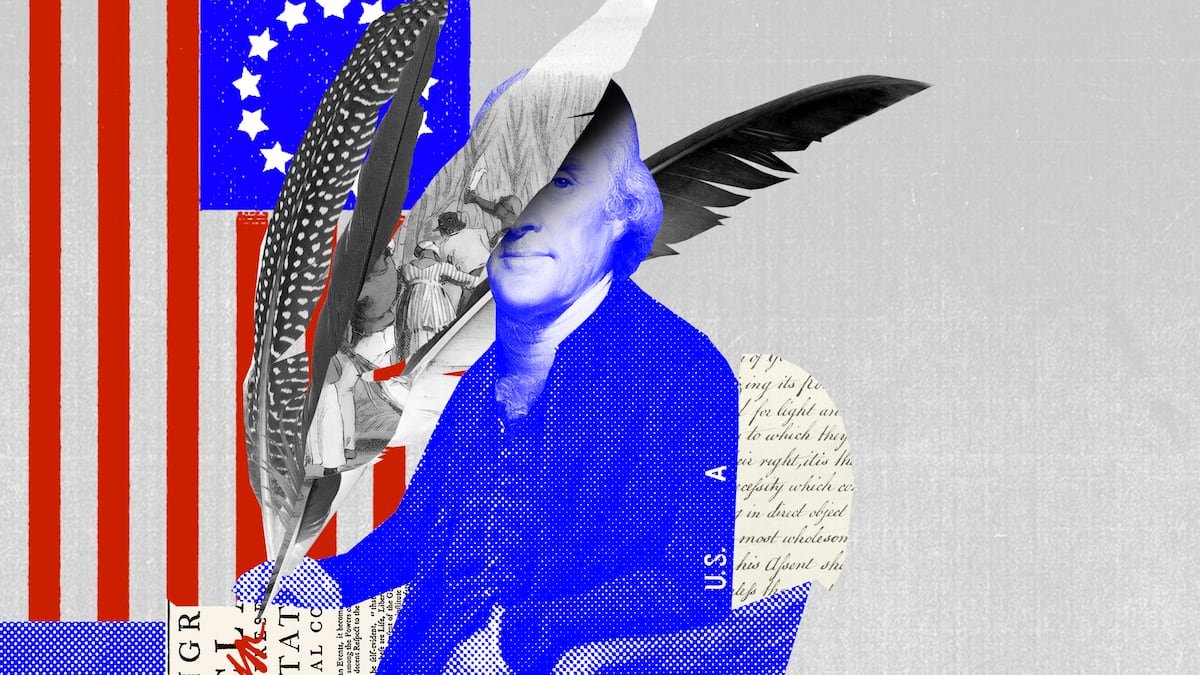
That book −more like a 47-page pamphlet− was published to great success in January 1776. Its eloquent defense of independence from the English crown as the only possible way forward for the 13 colonies paved the way for what would transpire on July 4 of that year: the birth of the United States of America, which is turning 250 on Saturday.
The congressman, who made headlines as the man in charge of leading the second impeachment against Donald Trump, agreed to an interview on the occasion of the anniversary celebrations, to talk about Paine and his influential pamphlet, a literary and political milestone in the history of the United States. And he did so more as the constitutionalist that he is by trade than as the leading Democratic figure he has become in the last decade.
Raskin, who was sworn in as a lawmaker at the same time that Trump first arrived in the White House, introduced a bill in 2022 to honor Paine with a statue at the National Mall. Then-president Joe Biden signed it, although the initiative has been blocked by the Trump Administration; Raskin is one of the president’s most high-profile critics at the Capitol.
In a message on his social media site Truth Social, Trump wrote three weeks ago that, had he not been granted a preventive pardon by Biden, who did the same with the other eight members of the January 6th Committee, Raskin would “be in jail right now.”
With that kind of precedent, it is no surprise that a conversation about a text dating back to the 18th century ended up as an analysis about the convulsed present in Washington.
Question. At the end of 1776, Paine published another pamphlet, The American Crisis, which includes what might be his most memorable quote: “These are the times that try men’s souls.” Are these also our times?
Answer. I use that passage just about every time I speak these days, because there’s great anxiety and depression in the country because of the monarchical habits and policies of the Trump administration. But we’re in the throes of a great political resistance and organizing to turn things around.
Q. Do you think the Declaration of Independence would have gotten as far as it did without Paine’s pamphlet?
A. Even the most radical founders, like Benjamin Franklin and Thomas Jefferson, really had not contemplated that the American Revolution would proclaim a completely different system of government. There were founders like Alexander Hamilton who were talking about just replicating monarchy in North America. But it was Thomas Paine who said that this was a moment to destroy monarchy, feudalism, and an established church.
Q. He was himself a newly arrived immigrant…
A. In Common Sense, he said that America would become an asylum to humanity. Not an insane asylum, mind you, but a place of refuge for people seeking freedom from political, religious, and intellectual repression. Paine was reviled by the kings and queens, but also by a lot of the the colonists, and even after the revolution by a lot of Americans because of his attacks on theocracy and the church. To this day, he is still reviled in some quarters in America, and he is dishonored by a lot of people. Certainly a lot of people on the right. It’s a scandal that perhaps the founder most critical to igniting the American Revolution still does not have any kind of statue or recognition in the national capitol.
Q. What would the Founding Fathers have thought of Trump’s immigration policy?
A. They would not have understood it. Paine wanted America to welcome all of the champions of liberty who had been hunted all over the world. And he said the cause of America is the cause all mankind. And that generation understood not only that everybody coming here were migrants, but also that the Native Americans were here first. So from the perspective of the Native American Indians, everybody to follow was an illegal alien.
Q. Is Trump being successful in his bid to rewrite American history?
A. We had a very good Supreme Court decision upholding birthright citizenship, the first sentence of the 14th Amendment, which says that everybody born in America is a citizen in America. We’re in a big fight as the MAGA movement tries to redefine citizenship around discredited notions of blood and soil. Meanwhile it’s obviously embarrassing to our country to have mixed martial art fighting by a for-profit business that the president is involved with on the front lawn of the White House. It’s like a cartoon caricature of what he’s done to our country. So, we’re just asking our friends from all over the world to be patient as we get through this lapse into authoritarianism.
Q. Will the American experiment survive?
A. Oh, yeah, I know it. When I was growing up, they used to teach us about American exceptionalism. But it’s clear today. What’s exceptional about America is not that we are somehow immune to fascism or racism or antisemitism or any of the other poisonous forces plaguing the world today. What makes this country exceptional is only that people from all over the world have come here and have always fought to create a more perfect union.
Q. That idea of a “more perfect union”, from the preamble of the Constitution… does it imply that the union is somewhat perfect?
A. The idea of a more perfect union implies that that we are involved in an historical struggle to build on past progress to become an even stronger and better society. So I suppose more perfect is an optimistic way of saying less oppressive and a little bit better.
Q. What happens when someone is attacked by Trump on Truth Social?
A. Trump associates me with the second impeachment trial because I was the lead impeachment manager. So that’s an unpleasant memory for him. Like most everybody else who gets attacked by the president, I’ve had to increase my security accordingly.
Q. If, as surveys indicate, Democrats win in November, what would the priority list be?
A. It’s an overwhelming assignment and we are in the process of planning for it, but we have to dismantle the authoritarianism, the unprecedented corruption and the destruction of the rule of law. At the same time we have to make very specific material progress on things like healthcare and bringing down the inflation that has been running wild under Trump’s illegal war in Iran and his illegal tariffs against the world. So there’s no doubt we have our hands full. And we don’t want to make extravagant promises that we can’t meet.
Q. Who will win the battle for the soul of the Democratic Party? The socialists of New York Mayor Zohran Mamdani, or the moderates?
A. I believe that whole conflict is overplayed. You know when young people in America call themselves socialists, they mean they want a lot greater equality and opportunity for all citizens. I do not think they are stating that they believe in dialectical materialism or dictatorship of the proletariat. It’s consistent with where the vast majority of Democrats are politically.
Q. Trump does not hesitate to brandish the ghost of communism…
A. The only communists left on Earth are basically Donald Trump’s role models and best friends. He loves Kim Jong-un, who’s a communist, and he loves Vladimir Putin, who was the head of the KGB. He actually wants the U.S. government to be buying up American corporations. And he has a program of state control of the media and government violence against the people. So if anybody is filled with communist alliances and connections, it’s Donald Trump.
Sign up for our weekly newsletter to get more English-language news coverage from EL PAÍS USA Edition