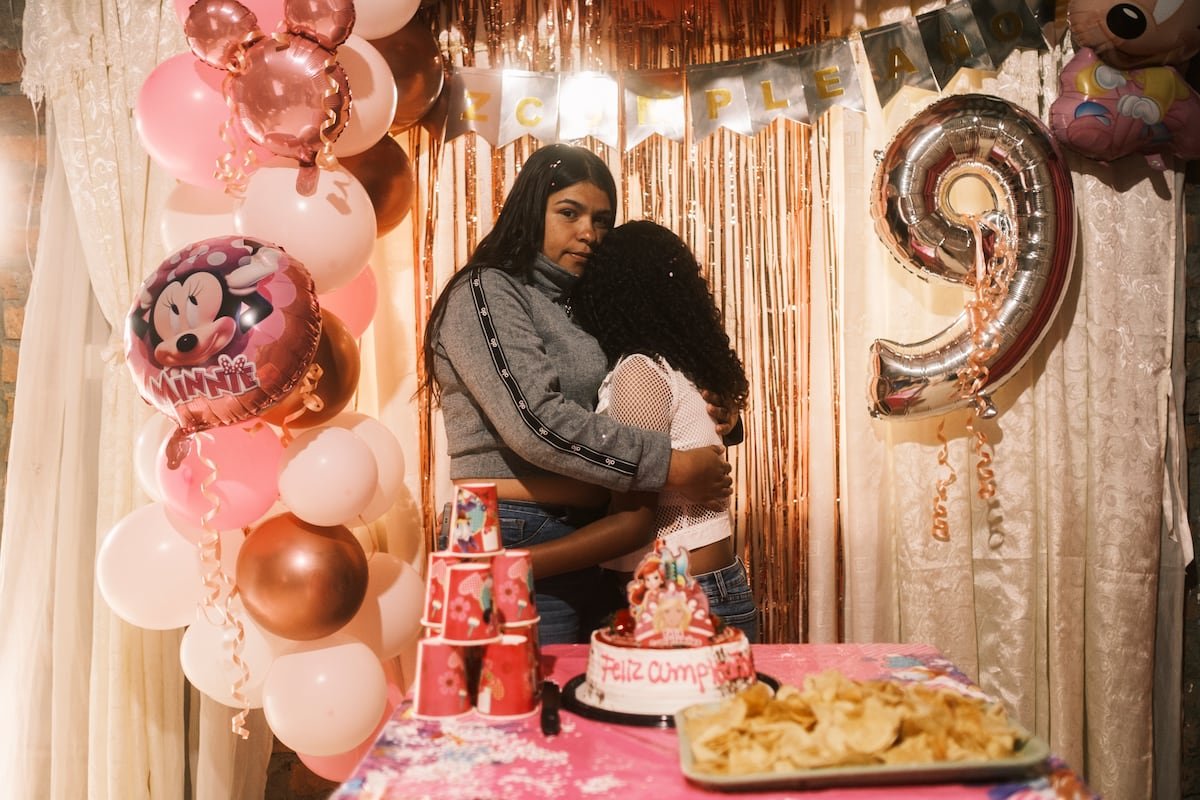
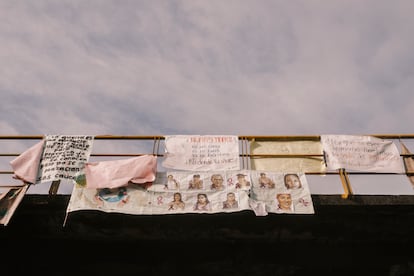
The adults in María Zenaida Puliche’s house struggle to hold back tears in front of Sofía, who is turning nine. They take turns approaching her and posing for a picture with the strawberry cake. The little girl smiles and hugs her father, her aunts, and her cousins. But not her mother. Daniela Valencia was one of the 22 victims killed in an attack perpetrated by dissidents of the now-defunct FARC on April 25 in Cauca, a region in southwestern Colombia where armed groups have cornered the state and violence lurks every hour of the day. It was the deadliest terrorist attack on civilians in the country since 2003, just a month before the presidential elections.
Daniela was returning home to the rural area of Cajibío when a bomb exploded on the Pan-American Highway, the main road in the region. She was traveling with her neighbors on Ciro Puliche’s bus, which took them every Saturday to the neighboring town of Piendamó to sell their coffee, plantain, and panela (unrefined cane sugar) produce. She had gone to a dental appointment and taken the opportunity to buy a whiteboard and markers as a birthday present for her daughter.
The Central General Staff, a dissident group of the FARC guerrillas that didn’t join the 2016 peace agreement, stopped them on the road. It would have been just another of the checkpoints that illegal groups carry out daily throughout much of the country, but it ended in one of the worst attacks in decades: the armed group detonated a gas cylinder bomb that, according to the dissidents, was intended for a military contingent. Daniela’s body and those of her neighbors were disfigured and had to be mourned in closed caskets.
Aunt María Zenaida, who was like a second mother to Daniela, says she is overwhelmed with a feeling of powerlessness. “I don’t feel resentment because I don’t want my heart to harden: hatred doesn’t sow peace. But I want to scream. They kill you inside when they take someone from you like this,” she says. Her greatest frustration is with the state, incapable of responding to these crimes. “Who can you complain to? There’s no one to hold accountable for our dead. Only God, who isn’t responsible for what humans do,” she states. She doesn’t mention them by name, but armed groups are the ones who, in much of Cauca, control access to rural areas, extort money, and carry out “social cleansing”: the murders of alleged criminals. The state is as powerless as she is.
The return of terror
Violence in Cauca has intensified over the past two years. Peace negotiations between Gustavo Petro’s government and the Central General Staff collapsed in early 2024, following the assassination of an Indigenous leader who was trying to prevent the forced recruitment of teenagers. “If it’s war, it’s war,” the president declared at the time. News of military bombings, cocaine seizures, attacks by dissident groups on police stations, and deactivated or detonated gas cylinders on the roads became commonplace. The civilian population was caught in the crossfire.
Along the Pan-American Highway, the presence of the army and police is barely noticeable. A lone uniformed officer explains that this is part of the security forces’ strategy, given their limitations in combating the armed group. “The dissidents carry out actions to lure us into a trap. So, if we move, there’s an immediate threat,” he says.
The order, then, is to remain as still as possible. He advises civilians not to go out at night because the armed groups are more active then. “If they steal your truck, you’ll never see it again, even if you have a GPS. Nobody’s going to look for it,” he says. “There’s no escort or any kind of response. Just self-defense if we’re attacked.”
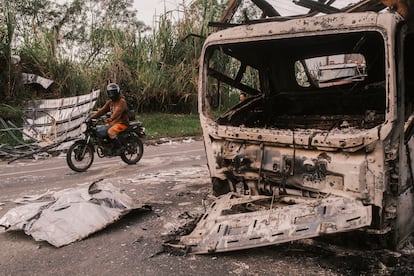
The attack in Cajibío has exacerbated the anxiety of various sectors of the population in Cauca. Andrés, a 22-year-old Misak Indigenous man, says he passed by the site of the attack just minutes before the explosion. “It could have been me,” he says on a bridge on the Pan-American Highway, congested due to intermittent closures caused by explosives and threats against the concessionaire’s workers.
About 30 miles away, in Caldas Park in Popayán, the department’s capital, a 72-year-old lawyer expresses the same concern. “I’m not at peace here, or anywhere else,” she says before clarifying that she is only there to attend to some paperwork. For her, the tranquility of a historic downtown with luxury hotels, gourmet restaurants, and tourists is an illusion: “If they want, they can destroy it in a second.”
Elsy Sánchez, a teacher who arrived in Popayán after being displaced by violence in southern Cauca, wonders if the attacks by dissident guerrilla groups are related to the presidential elections on May 31. “I don’t remember ever experiencing anything like this before. Could it be because the elections are coming up? Everyone is tense; people don’t want to come downtown,” she says. An increase in violence in the weeks leading up to elections is common in Colombia, but no one expected an attack of the magnitude of the one that occurred in Cajibío.
Election speculation
The security crisis in Cauca, a stronghold of Petro’s political movement, has entered the national debate. Leftist candidate Senator Iván Cepeda suggested that the attack could be an attempt by the armed group to benefit “far-right sectors intent on destabilizing the country.” From the candidate’s perspective, the terror could lead some voters to support the opposition’s hardline proposals. Right-wing candidate Paloma Valencia, for her part, criticized the insinuation of an alliance between her sector and FARC dissidents. “Now it turns out the guerrillas have become Uribistas […]. It is they, Cepeda and this government, who must answer for the disaster of their [plan for] total peace.” The leftist senator was an architect of the failed peace negotiations.
The right-wing candidate is a descendant of a Creole elite from Cauca that consolidated immense power during the colonial era, with vast estates and mining operations. Her grandfather, Guillermo León Valencia, was president between 1962 and 1966. Although she has reconnected with her region after the Cajibío bombing, a few weeks ago, she acknowledged that it is hostile territory for her and that she can only campaign in the cities of Popayán and Santander de Quilichao. “It’s very Petro-friendly territory, because class hatred was sown a long time ago,” she said.
In contrast, Cepeda’s running mate, Aída Quilcué, belongs to the Nasa people of Cauca and has denounced the dispossession suffered by Indigenous communities. She is a key figure in the Regional Indigenous Council of Cauca (CRIC), an organization that has developed a significant capacity for social mobilization.
One of Valencia’s supporters is Isabella Victoria Rojas, director of the Cauca Farmers and Ranchers Association. “I want someone who will do what needs to be done, who won’t hesitate, and who will ask for support from Colombia’s historical allies to equip the Armed Forces,” she says during an interview in her office, decorated with paintings of colonial haciendas and illustrious figures from the founding of Popayán.
She says that an attack in the Cauca capital is “imminent” and that she receives reports almost daily of attacks on medium and large landowners throughout the department: a security guard killed, machinery set on fire, hundreds of hectares seized. She doesn’t understand how Petro’s party swept the legislative elections in March. She believes that what happened in Cajibío was an attempt by FARC dissidents to “intimidate people” into voting for Cepeda. “It’s a demonstration of what they are capable of doing if the right wing wins.”
On the opposite side is Orlando Baicué, spiritual leader of the Nasa people. “The armed groups are doing the extreme right a favor. The attack was a provocation to generate chaos and get society to elect the ‘saviors’ who are going to militarize everything,” he says during a break in a CRIC meeting in the Cofradía reservation, near Popayán.
He acknowledges that the armed groups “took advantage of the peace negotiations to arm themselves clandestinely” in recent years and that many young Indigenous people join them due to a lack of opportunities. The frustration reaches the point where several of his companions want to cast blank ballots.
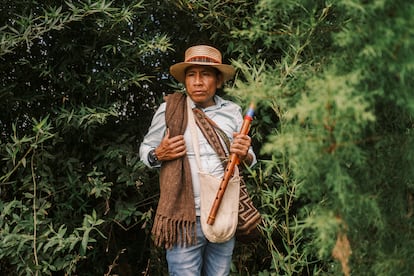
“I’m trying to convince them not to. I urge them not to lose hope, to understand that more hasn’t been possible because [the opposition] has tied our hands and our representative [Petro]’s hands,” he says, before emphasizing that the only thing he fears is not being able to play the transverse flute he carries with him everywhere.
What unites Rojas and Baicué is that neither is enthusiastic about the candidates from Cauca. “Cepeda’s advisors in Bogotá don’t understand the context. They didn’t need to put an Indigenous woman in the running to convince us; they needed to find someone who would appeal to the center. And besides, they imposed her on us without holding an internal consultation, which is what we criticized the traditional parties for,” the Indigenous leader comments.
The leader of the farmers’ and agricultural workers’ association is skeptical that the arrival of a woman from Cauca to the presidency will improve the region’s situation: “We’ve had 15 presidents, and she would be number 16. If that were important, one would expect us to be much better off. But it could be an opportunity. Cauca deserves for one of its own to give back what it owes.”
Voter apathy, in the face of right-wing and left-wing policies that have failed, is evident. “Elections? What matters now is the violence. How many innocent souls have already been lost?” responds a man buying potatoes in downtown Cajibío.
However, Diego Jaramillo, a retired professor from the University of Cauca and close to the Indigenous movement, is optimistic about Petro’s chances. He recalls that Cauca was one of the departments with the highest voter turnout in the primaries in which Cepeda was chosen as the candidate in October. “Petro has managed to make some sectors of the department feel represented. And his message has resonated: ‘It may not have worked today, but it will later,’” he says. According to him, it is unlikely that the attacks will cause a shift to the right: “People’s sensibilities aren’t built solely through this.”
Change that never came
The children, nephews, and siblings of driver José Ciro Puliche gather in the room where they held the wake the day before. Funeral flowers still hang there, along with a photo of him smiling next to his “chiva,” the colorful bus he was riding in with his neighbors at the time of the attack. Robinson Puliche, his 21-year-old son, says he’ll miss the jokes they shared about soccer: he’s a Deportivo Cali fan and his father supported América de Cali, two rival teams. He’ll also miss other neighbors who died: Doña Libia, who gave romantic advice; Doña Teodomira, who cooked him beef when he was a child and refused to eat fish; and Daniela, whom he met at parties in town and during community work repairing the rural road.
Elmer Puliche, Ciro’s nephew, says he voted for Petro four years ago, hoping he would change the historical neglect faced by Indigenous people, Afro-Colombians, and farmers in Cauca. “I expected him to fulfill at least 50% of his promises, but he didn’t even reach 10%, especially regarding peace,” he says. Romulo, Ciro’s brother, rejects the president’s explanations for the congressional gridlock or his ministers’ inefficiency in implementing social changes. “A good leader doesn’t look for someone to blame, but rather takes action and seeks solutions.”
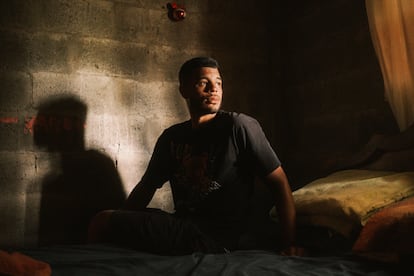
No one understands the logic of the FARC dissidents, who in recent years have lost any semblance of political aspirations and have become criminal groups. “They don’t care about taking the farmers, who are the ones who suffer the most,” says Angela, Ciro’s eldest daughter. Robinson rejects a statement in which the Central General Staff defined the attack in Cajibío as “a mistake,” “a regrettable incident,” a “collateral effect.” “How can it be a simple miscalculation that they killed 22 innocent people?” he asks.
The family has no illusions that things will improve, but they rule out any possibility of leaving Cauca. Robinson says that his father once told him he had refused to sell his farm. “He told me, ‘This land saw me grow up, and I want to stay until my last day,’” he emphasizes. He died on his land, in a war that neither the state nor the politicians yet know how to stop.
Sign up for our weekly newsletter to get more English-language news coverage from EL PAÍS USA Edition