

The real estate sector is a land of contrasts: it enriches some and excludes others. This corrosive paradox has grown to unprecedented levels, so extreme that it’s beginning to shake the foundations of the welfare state. Both realities are difficult to ignore.
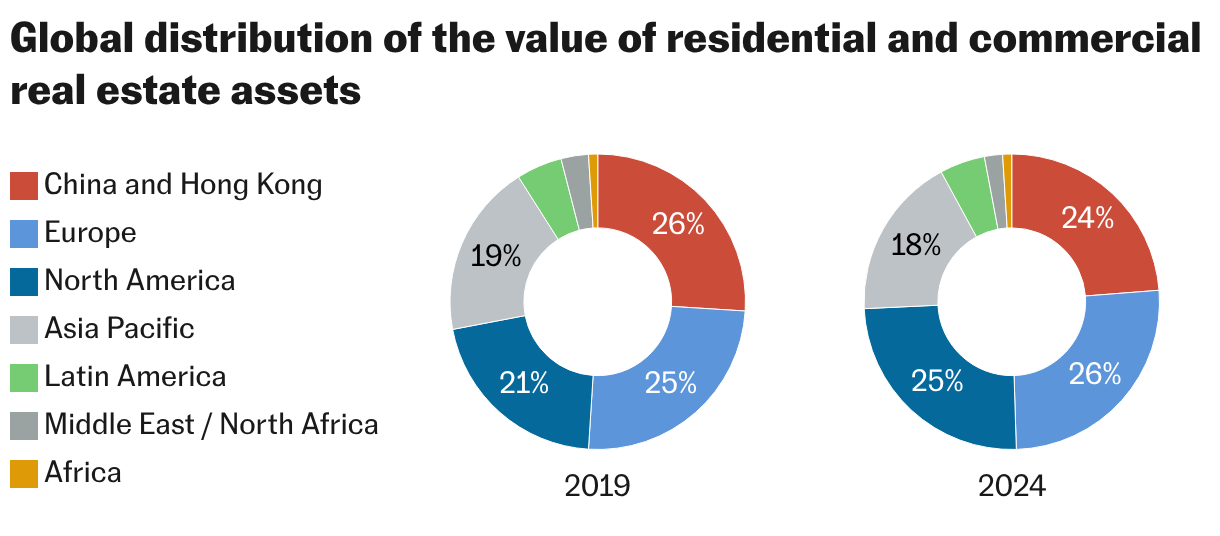
On the one hand, real estate is the largest reserve of wealth on the planet. The global real estate stock — housing, commercial assets and agricultural land — reached a value of $393 trillion at the beginning of 2025, of which $286.9 trillion corresponds to housing alone, according to the international consultancy firm Savills. This figure is almost 20 times the value of all the gold mined in history. And it easily surpasses the sum of the world’s stock markets and global debt.
On the other hand, access to housing has deteriorated sharply in many developed economies, to the point of being a direct cause of impoverishment and inequality. This is certainly the case in Spain, one of the European countries where access to housing has worsened the most, especially in the rental market. “Forty-five percent of the population is suffering from the crisis; more than four out of 10 households cannot afford basic expenses. The economy is growing, but poverty is becoming entrenched, and housing is pushing more families into precarious situations,” Oxfam Intermón states.
Recent Eurostat data and studies from the OECD place Spain among the countries with the highest rates of housing cost overburden; in other words, too many citizens spend more than 40% of their net income on rent.
Housing as a right versus housing as an economic asset: these two opposing forces have given rise to a major structural crisis. The challenge is enormous for governments, institutions and society as a whole. This is because — in a world where money is parked in real estate — the battle for decent access to housing has become complicated. As real estate surpasses the sum of all debt and the global stock market, it ceases to be just another sector of the economy. “Real estate becomes the very infrastructure of modern capitalism,” says Manuel Hidalgo, a professor at the Seville-based Pablo de Olavide University, and an economist at EsadeEcPol, a think tank in Madrid.
After the Great Recession, the era of ultra-low interest rates — between 2009 and 2022 — pushed global investors to seek assets with stable returns, and housing was one of the main destinations. The abundance of liquidity and cheap credit fueled the massive influx of funds, family offices and Real Estate Investment Trusts (REITs), not to mention individual savers and commercial banks, which continue to fuel demand through mortgages. Post-pandemic inflation, wars and financial volatility have reinforced this trend.
This is how housing has become a benchmark used by global financial markets. Greg Fuller, an adjunct professor in the Department of International Relations and International Organization at the University of Groningen in the Netherlands, explains the driving force behind this investment shift: “[The sector has] an insatiable need for products that allow savings to earn some kind of return.”
Market value
The shift in focus has been extraordinary. “Previously, housing was valued primarily for its use value [its function as a place to live]. Today, it is increasingly judged by its exchange value [its value as a financial asset that can generate returns through sales, rents or capital gains]. Investors treat housing as just another asset class,” notes Manuel Aalbers, professor of Social and Economic Geography at the University of Leuven (KU Leuven), in Belgium. Economist Manuel Hidalgo adds: “Today, housing competes with government bonds or technology stocks.”
The consequences, like those of a devastating hurricane, have already made landfall: almost everyone knows someone struggling to pay rent or secure a mortgage. The growing variety of actors buying homes and buildings, not to live in them but as investments, has contributed in one way or another to soaring prices and a shortage of supply. In many developed countries, there’s a significant housing deficit, with construction not having kept up with population growth.
In Spain, the rental housing stock held by large landlords or investment funds is small: it barely represents around 10% of the total. The country has one of the most fragmented housing stocks in Europe, unlike Germany or France, where up to 30% of rental properties are in institutional hands. So, what’s the reason for this disparity? Javier Gil, a researcher at the Spanish National Research Council (CSIC), argues that large funds set price trends, concentrate property ownership and, therefore, influence inequality. And their power doesn’t stem from mere size, but from economic and regulatory models that prioritize rent-seeking and the financialization of housing.
Regarding supply, “the fact that a growing portion of the [housing] supply in recent years has gone to investment has eliminated a portion that could have gone to young people and new middle-income households,” says Santiago Carbó, a professor of Economics at CUNEF University, in Madrid. According to Professor Aalbers, “the ultra-wealthy buy homes in certain locations and keep them empty most of the time — often simply to park their cash — thus reducing the available supply and driving up prices.”
These warnings aren’t new. For years now, various experts — such as the U.N. special rapporteur on the Right to Housing — have been warning that the massive influx of international capital and institutional investors is transforming housing into a global financial asset, disconnected from its social function. Tensions have reached a fever pitch, with many sectors of civil society and political forces explicitly calling for a ban or restrictions on home purchases by large investors, funds and corporations.
Several regional and national governments have responded with measures designed to curb speculative demand. Spain ended its so-called golden visa program in April 2025 (which had granted residency rights to non-EU nationals making qualifying investments in the country), while the region of Catalonia has expanded rent-control measures in designated “stressed housing markets.”
The debate has spread to other countries. In the United States, the Senate approved a major housing bill in March 2026 that would restrict large institutional investors from buying additional single-family homes if they already own 350 or more properties.
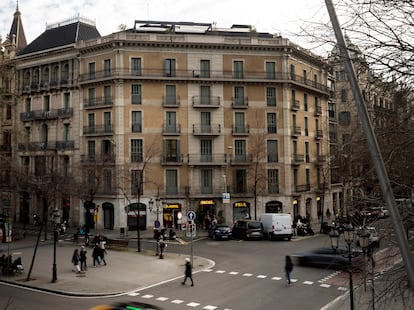
To understand how we got here, we must examine the global phenomenon of financialization. This term — which began to be used in academia in the 1980s — describes the process by which housing ceases to be a place to live and instead becomes a financial asset: an instrument for generating returns, securitizing debt, attracting international capital, and feeding bank balance sheets and investment funds.
“What we’re seeing — at an increasing speed — is the movement of capital and its penetration into an ever-growing range of products and services, many of them essential to human life,” says Rowland Atkinson, a sociologist and professor of Urban Studies at the University of Sheffield, United Kingdom. Housing is a true reflection of this transformation.
Older generations may point out that homes have always served as a form of savings. That is true. Housing has carried an investment dimension since ancient times. “It’s been at the base of Maslow’s [hierarchy of needs] and has always incorporated the economic component. It’s something natural, inherent to human beings,” says Sergio Nasarre, a professor of Civil Law at Rovira i Virgili University in Catalonia and director of the institution’s UNESCO Housing Chair.
However, nothing compares to the current scale. Real estate used to be a local business; today it’s a global, decentralized capital market. “Small landlords with one or a few properties have always existed, but today, we also have large corporate landlords, usually backed by financing from the City of London or Wall Street — that is, the world’s leading financial centers. There are private equity funds, hedge funds and global asset managers like Blackstone that buy homes all over the world,” Aalbers points out.
Their influence is growing: in 2025, international institutional investors accounted for 47% of all real estate investment in Spain, which totaled approximately €15.14 billion ($17.84 billion), according to BNP Paribas Real Estate. And 44% of the world’s family offices plan to increase their exposure to the residential sector, as they consider it to be a safe haven against financial volatility and inflation, according to the consultancy Knight Frank.
For certain institutional investors — such as pension funds — government bonds are perceived as yielding too little, while stocks may be seen as too risky. Housing, in general, “is less susceptible to large negative price movements. Often, a bad market simply means that prices remain stable,” Fuller points out. It’s also a hedge against inflation; a home is a tangible asset that retains value. The rise in tourism and the returns on vacation rentals — far exceeding those of traditional rentals — also explain the investment surge.
The brick-and-mortar culture
But financialization isn’t just about large funds. In Spain, for instance, around 92% of rental housing stock is owned by individual savers. A real estate culture has been reinforced after years of volatile financial returns and negative interest rates. In many developed countries, housing is the main component of family wealth: it’s bought to rent out, to protect against inflation, to diversify, as well as to pass on wealth to the next generation.
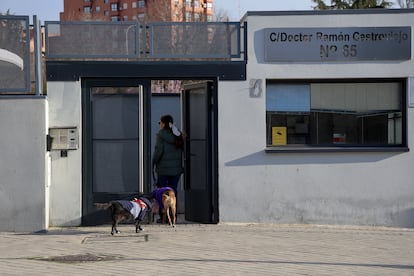
Economist Thomas Piketty, author of Capital in the Twenty-First Century, warned as early as 2013 that the share of real estate capital in private wealth had been rising steadily since the 1970s. Few could have imagined what would follow.
According to the Bank of Spain, households’ real estate wealth now exceeds €7.4 trillion ($9.53 trillion), roughly five times the country’s GDP. But the gains are far from evenly distributed. Property wealth is highly concentrated: the richest 10% of households own around one-third of all real estate wealth, while the bottom half of households hold only about 15%.
Cadastral data show that the number of owners with two, five or more properties has risen significantly, while the share of small owners with just one property has declined. This growing concentration of housing assets is accelerating inequality.
For many economists, the issue is not simply that housing has become more valuable, but that ownership itself has become increasingly concentrated. As property prices rise, those who already own real estate benefit from capital gains and rental income, while those without assets face ever higher barriers to entering the market. The result is a widening gap between homeowners and renters, and between households that own multiple properties and those that own none at all.
Miguel A. Martínez, a professor of Housing and Urban Sociology at the Institute for Housing and Urban Research at Uppsala University, in Sweden, is a leading voice in the analysis of urban movements and the financialization of housing. He is reluctant to place too much blame on small-scale investors. “The fact that more private individuals are becoming landlords, or that middle-class households are accumulating second or third properties and reselling them speculatively, is problematic, but it is not the determining factor,” he argues.
Aalbers makes a similar point. For ordinary households, he says, housing can never be “just another asset class.”
Higher prices
For this entire investment machine to keep running and generating profits, housing prices must continue to rise. That’s the lifeblood of the housing market. “As an asset, housing seeks scarcity [meaning that prices rise] and the maximization of income. As a social right, housing requires abundance [with falling prices] and affordability. It’s an inherent contradiction,” Manuel Hidalgo explains. He continues: “You can’t satisfy an investment fund seeking a 7% annual return and, at the same time, guarantee that a worker doesn’t spend more than 30% of their salary on rent. It’s up to policymakers to choose,” he adds.
Some analysts, like Hidalgo, agree that the public policies implemented over the last few decades have helped create this situation. “They’ve incentivized ownership and speculation through tax breaks, while neglecting the construction of public housing. The market has simply followed the incentives that governments have put in front of it.”
Central bank monetary policy has also played a role. Atkinson speaks of the “persistent manipulation of interest rates to serve the interests of homeowners.” And Gil believes that the world’s most important political and economic actors intervene in the economy with a single goal: “To prevent asset prices from falling.”
He raises the stakes by suggesting that the housing market rests on a classic speculative, Ponzi-like dynamic: “It’s sustained only by two elements: the massive injection of liquidity by central banks and the excessive public debt that has skyrocketed since 2008.”
Some experts go even further, arguing that there’s a self-serving narrative reinforcing the idea that housing prices always rise. “This is driven by the most powerful players in the real estate markets, but also by the authorities, who consider real estate sales [to be] positive indicators of economic growth, [which bolster] the illusions of the working and middle classes to artificially increase their wealth and assets,” Miguel A. Martínez notes. He believes that a very dangerous inflationary process is being “hidden behind a discourse of false economic optimism.”
Manuel Aalbers explains why rising housing prices cannot be seen as something positive: “It may actually be a sign of a malfunctioning economy, since investors don’t see investment options in productive sectors.”
For Manuel Hidalgo, the rental economy represents “a loss of competitiveness, because if 50% of your salary goes to rent, that money doesn’t go to consumption or innovation, dragging down the real economy.” From this perspective, the economist believes that the only way out of the crisis is to defund the housing market: “[We need] greater public supply, taxes that penalize vacant housing and regulations that prioritize residential use over speculative use. It’s not the end of the market, but rather, it’s necessary regulation to avoid social collapse,” he argues.
Nasarre has a different view. The professor rejects the idea that housing’s role as a social right is incompatible with its role as a financial asset. “They must coexist; it’s their nature. No matter how determined governments may be to change that nature through legislation, homes are what they are and what they have always been. The Official State Gazette does not change reality.”
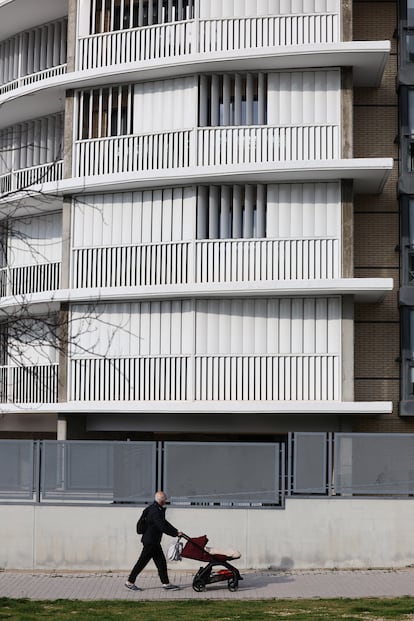
The transformation did not happen overnight, nor was it triggered by a single event. It’s been developing for several decades. Financial deregulation in the 1990s allowed credit to flow massively into the real estate sector.
“With the globalization of capital and neoliberal policies since the 1980s, capital flows are faster; investments have increased both in the construction and sale of housing, as well as in its financing through mortgages,” Martínez notes.
Competition in these markets led to a series of financial innovations, including the buying and selling of mortgages, their securitization and fragmentation, and the extension of credit with insufficient safeguards. “Financial actors needed to find new and different sources to obtain [lucrative] returns. And housing was one of the most attractive sources of new financial products,” Fuller explains.
The bursting of the property bubble in 2008 became one of the clearest examples of how highly financialized housing markets could transmit shocks across economies, particularly in Spain, Ireland and the United States. Spain’s government, like many others, subsequently sought to attract investment, while the era of ultra-low interest rates accelerated the trend.
“Cheap money desperately sought returns. [Consequently], housing became the new gold in some countries and has since consolidated its position as an investment asset,” Manuel Hidalgo states.
In Spain, REITs were first regulated in 2009, although their growth began in 2013, following a legal reform that made their tax and operational regime more attractive. The goal was to revitalize the rental market. Since then, the concept has grown as an alternative for investors and speculators, “which represents another facet of the financialization of housing, [resulting in even] less contribution to the value chain since, in general, [fewer units are] being built for the rental market,” Martínez points out.
The platform economy, which gained momentum from around 2015, further accelerated the shift. “Digitalization — with Airbnb — and professionalization, with REITs and crowdfunding, have transformed an apartment into a liquid asset that can be bought from an iPhone in Singapore,” Hidalgo says. “Capital that previously didn’t enter the sector is now flooding in, professionalizing rent extraction.”
An engine of inequality
“A ticking time bomb.” “Dangerous.” “More conflict.” “A risk of social collapse.” These are just some of the descriptions used by the analysts consulted by EL PAÍS to define one of the most perverse and paradoxical cycles. The consequences of housing speculation are now more severe, affecting a broader range of social groups and more countries than ever before. No longer confined to young people or low-income households, housing affordability has become a mainstream concern. The OECD has emphasized in various reports that rising housing costs are one of the main drivers of the wealth gap and generational inequality in developed economies.
Having a job and a decent salary is no longer a guarantee of securing a home. “In most countries, there’s a much larger wealth gap than income gap. Hence the idea of housing as an engine of inequality,” Aalbers argues.
Housing has always been a problem for low-income earners, but now, it’s also a problem for the middle class. “What we call ‘the housing crisis’ today has long been the reality for people with fewer resources,” says Aalbers.
Within the middle class, a new divide has emerged between those who managed to buy property in time and benefit from rising prices, and those who did not. Another fault line separates those who can rely on financial support from their families and those who cannot.
Hidalgo believes that, if the crisis continues, society risks drifting toward a system of “housing castes.” “Your well-being doesn’t depend on your talent or work, but on whether or not you’re going to inherit a home,” the economist warns.
This is the bitterest and harshest side of the financialization of housing. “It’s good for people who are close to being able to buy a home, while it harms people who really have no prospects of buying and for whom a greater borrowing capacity makes no difference,” says Fuller.
When access to housing breaks down, the social contract also breaks down, which is fueling polarization and populism. Atkinson argues that “generational resentment is real.”
If this crisis — which has already lasted far too long — continues, real estate will cease to be a refuge. Instead, it will become an ever-higher wall.
Translated by Avik Jain Chatlani.
Sign up for our weekly newsletter to get more English-language news coverage from EL PAÍS USA Edition