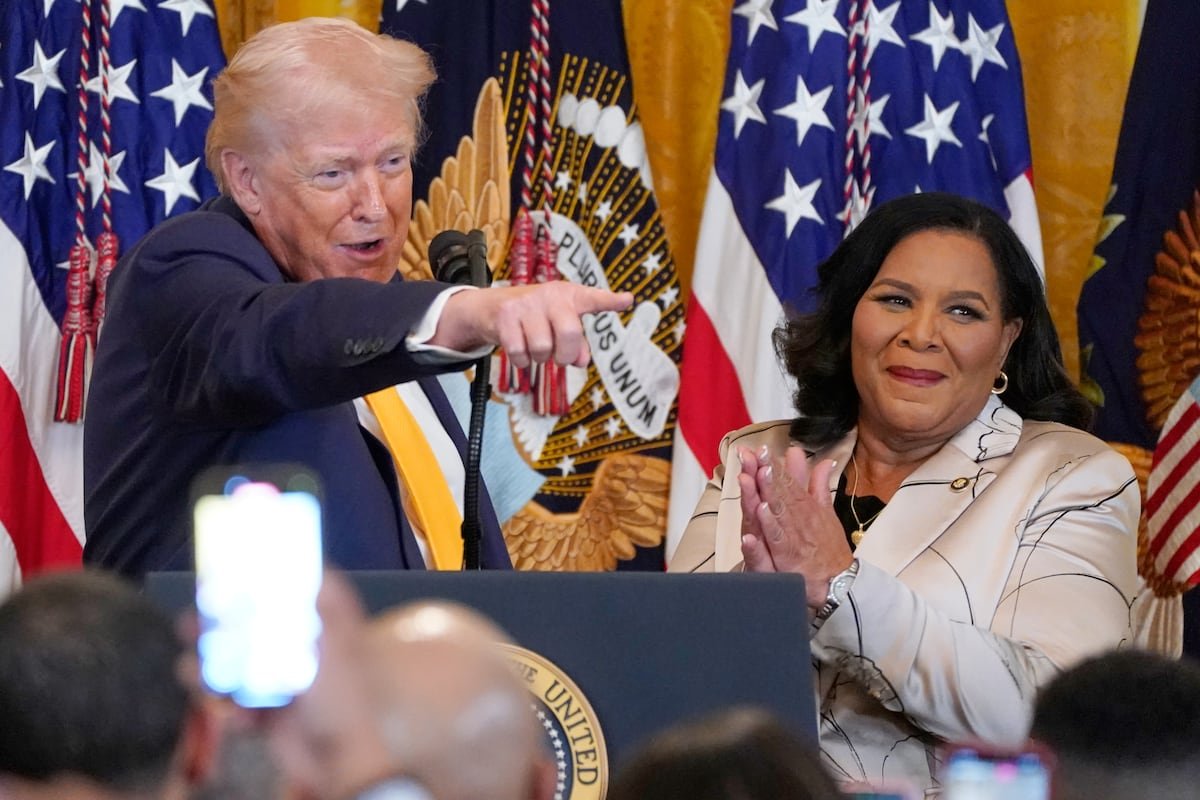
The latest beneficiaries of Donald Trump’s clemency were five retired American football players. Convicted of drug trafficking and perjury, they joined the crowded club of those pardoned by the U.S. president on February 12, following his return to the White House. That list already included cryptocurrency billionaires, Republican politicians, reality TV stars, and even former Honduran President Juan Orlando Hernández, sentenced to 45 years for his role in smuggling hundreds of tons of cocaine into the United States.
Trump’s passion for pardons, which is breaking records in his second term, began early: on his first day back in the Oval Office, he pardoned or commuted the sentences of nearly 1,600 people who had been prosecuted or convicted for the January 6 storming of the Capitol. Since then, the U.S. president has extended his clemency to another 199 people, including 77 involved in efforts to subvert the outcome of the 2020 election, a defeat he still refuses to acknowledge.
The scope, shortcuts, and motivations behind his pardon policy are unprecedented and have prompted a group of congressmen (including the Republican Don Bacon) to introduce legislation to amend the Constitution, giving Congress the power to block presidential clemency. However, Trump is not the first White House occupant to make controversial use of a power granted by the Constitution.
There’s Gerald Ford’s pardon of Richard Nixon to turn the page on the Watergate scandal, the more than 100,000 young men Jimmy Carter pardoned for evading draft in the Vietnam War, or the clean slate that Joe Biden, the president who pardoned 1,500 people in a single day, made with the crimes committed in the last decade (the known ones and those yet to be discovered) by his son, Hunter Biden.
Trump is indeed the first to appoint a “pardon czar.” She is responsible for recommending cases worthy of his attention and works in parallel with the Office of the Pardon Attorney, which is part of the Department of Justice. That first czar is Alice Marie Johnson, who was serving a life sentence for drug trafficking and money laundering, but whom Trump pardoned during his first term in office through the mediation of the celebrity Kim Kardashian.
By the time Trump intervened, Johnson was already considered a prime example of the punitive American criminal system, and the same activists who had advocated for her release greeted her appointment as pardon czar with a sense of betrayal, upon witnessing the chaos and the sheer scale of the clemency business in Trump’s Washington. “[The president] is clearly selling clemency. He doesn’t keep the money himself, but it goes to groups in his circle and other like-minded individuals,” says Pulitzer Prize-winning journalist David Cay Johnston, who has followed the tycoon-turned-politician’s business career since the 1980s and is the author of three books about him (including The Making of Donald Trump), in a telephone interview.
One of the original defenders of freedom for Alice Marie Johnson was Professor Mark Osler of St. Paul University (Minnesota), who, in a Zoom conversation with EL PAÍS, defined himself as an “expert on the workings of clemency in the United States who now finds himself unable to explain its rules with Trump in the White House.”
Osler points out that appealing to the pardon czar is just one of the possible paths to a clemency grant (News of the United States reported that Trump’s chief of staff, Susie Wiles, asked Johnson to back down to avoid the out-of-control image she’s projecting). Another route is to go through Washington lobbyists, who charge for exerting pressure to influence political decisions and who have seen a business opportunity in reinventing themselves as lawyers, charging fees starting at one million dollars for those seeking pardons. “Before, we were hired occasionally,” explains one of these influence professionals, who prefers to remain anonymous. “With Trump, pardons have become a booming business in the city, a whole industry, and many firms are adapting to offer these services.”
The third option? Gaining personal access to Trump, for example, at his private club in Mar-a-Lago, and obtaining clemency from the original source. It also helps to have someone close to the situation intervene, as veteran Republican strategist Roger Stone did for former Honduran president Hernández, though he has stated that he received no money for his actions.
The White House recently responded to an email from EL PAÍS with questions about the functioning and hierarchy of these clemency grants, in which it provided a link to a statement made by White House press secretary Karoline Leavitt, last November. “we have a very thorough review process here that moves with the Department of Justice and the White House counsel’s office. There’s a whole team of qualified lawyers who look at every single pardon request that, ultimately, make their way up to the President of the United States. He’s the ultimate final decision-maker,” Leavitt said that day. “And he was very clear when he came into office that he was most interested in looking at pardoning individuals who were abused, and used by the Biden Department of Justice, and were over-prosecuted by a weaponized DOJ.”
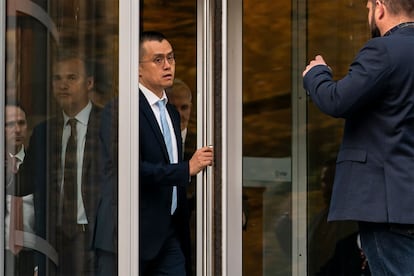
The president always has the final say, but he is not obligated to explain his reasons. In Trump’s case, he went so far as to pardon Changpeng Zhao, founder of the cryptocurrency company Binance, only to later tell the press that he had “no idea” who he was. “I know he was sentenced to four months [after pleading guilty to money laundering]. I was told that he was a victim, just like I was and just like many other people, of a vicious, horrible group of people in the Biden administration,” he said, before adding that he had pardoned him “at the request of many good people.”
One of those people was Washington lobbyist Ches McDowell, hired by Zhao. McDowell convinced Trump in the Oval Office after a memorial service for MAGA youth leader Charlie Kirk, who had been assassinated weeks earlier. That afternoon, the president agreed to grant the pardon, and McDowell went hunting in Utah with Donald, Trump’s eldest son, who, according to the lobbyist’s statement to The Wall Street Journal, had nothing to do with the success of his bid. Donald Trump Jr. is the founder, along with his father and brother Eric, of the crypto company World Liberty Financial, with which Zhao strengthened his business ties while pursuing clemency.
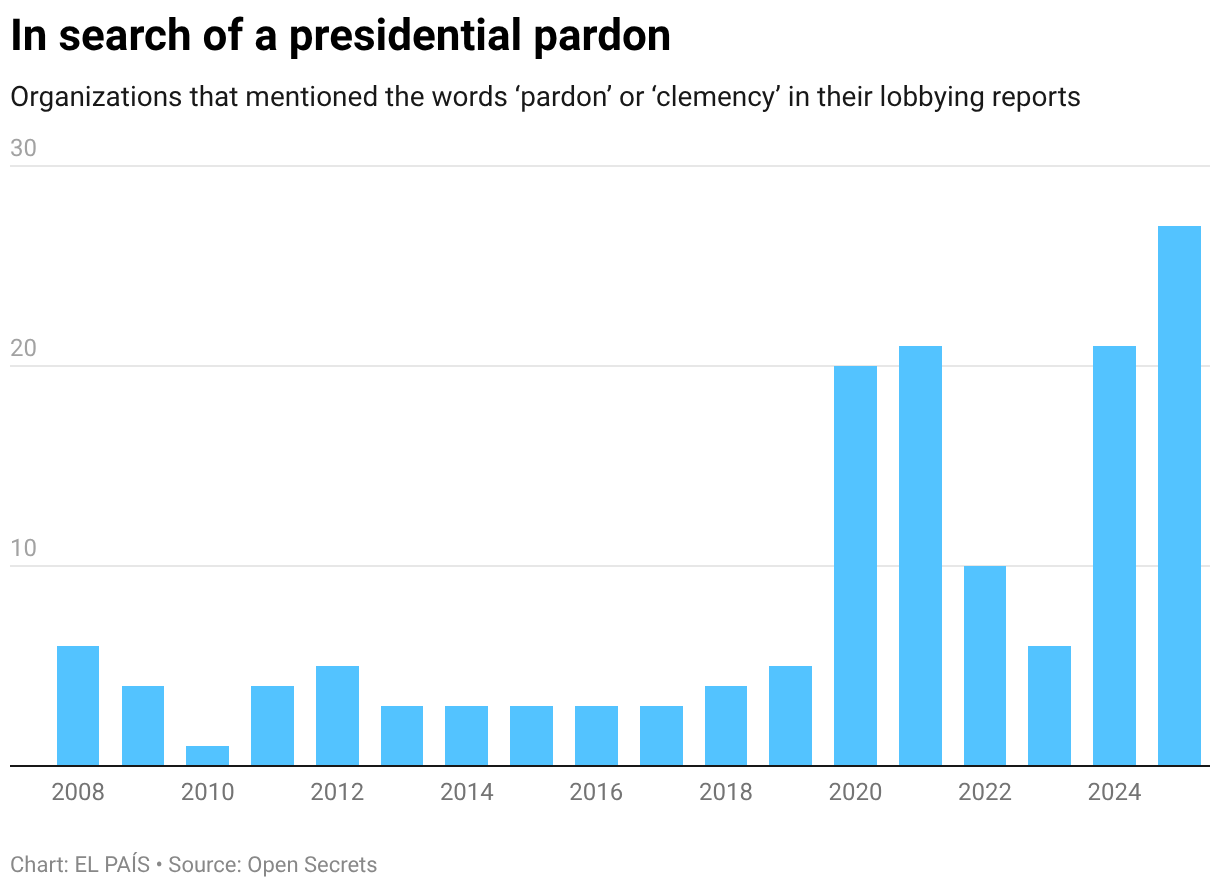
Binance spent $1.25 million last year lobbying in Washington, according to Open Secrets, a nonprofit organization that monitors the relationship between money and politics in Washington. At this newspaper’s request, one of its experts tracked the evolution of “organizations that mentioned the words ‘pardon’ or ‘clemency’ in their lobbying reports since 2008,” at the beginning of Barack Obama’s presidency.
Evolution since Obama
Last year, with Trump back in the White House, a record 27 mentions were made. The data indicates that these skyrocketed starting in 2020 (with 20), and that before then they never exceeded six annually. During Biden’s presidency, there was a dip until 2024, when 21 mentions were reached. This, Osler explains, makes sense: “It has been a tradition since [Bill] Clinton [1993-2001] for presidents to wait until their final year to administer their pardons.”
So the first year of Trump’s second presidency is anomalous. This is also true when compared to the first year of his own first term, when he pardoned only one person. “Obama, [who pardoned 1,927 people in eight years] used that power primarily for drug convictions,” Osler explains. “Biden [four years, 4,244 acts of clemency] did so broadly, categorically, often symbolically, and, in the case of his family, very objectionably. Trump uses it primarily for fraud convictions and matters involving the rich and famous.”
It also serves to send certain messages. “No MAGA left behind,” tweeted Ed Martin, the White House pardon attorney, after Trump pardoned a Virginia sheriff who was as corrupt as he was publicly loyal to the cause. Martin was appointed after the firing of Liz Oyer, which came when she refused to recommend that actor Mel Gibson’s right to bear arms be restored, a right he lost in 2011 following a conviction for domestic violence.
No MAGA left behind.
— Eagle Ed Martin (@EagleEdMartin) May 26, 2025
Since Martin took office, cases like that of Joseph Schwartz, whose name stands out in the OpenSecrets data cross-reference, have multiplied. The owner of a network of 100 nursing homes who pleaded guilty to defrauding the government of $38 million, Schwartz, who received presidential clemency in November, spent $1.06 million on lobbying efforts in 2025, $960,000 of which went to pro-Trump lobbyists Jack Burkman and Jacob Wohl, who had once themselves been convicted of fraud, and who succeeded in exonerating him.
The remaining $100,000 went to a man named John Nash, to whom Schwartz promised a second payment of $500,000 that never materialized. Last week, Nash was arrested for attempting to extort that money from his former client. It turns out he orchestrated the blackmail with someone who turned out to be a government informant and turned him in. For Oyer, the pardon lawyer fired by Trump, this incident proves that “the pardon business is so out of control that it breeds more crime. It’s a truly grotesque cycle of profit and corruption,” she says.
In this breeding ground, the line of candidates for a pardon is long. There are many famous names—from Elizabeth Holmes, the woman behind the blood-testing startup Theranos, to the fleeting star of cryptocurrency fraud, Sam Bankman-Fried—but above all, one: Ghislaine Maxwell. The fixer for the millionaire sex offender Jeffrey Epstein makes no secret of her efforts to try to get out of the 20-year prison sentence she has been serving since 2022.
Sign up for our weekly newsletter to get more English-language news coverage from EL PAÍS USA Edition