In Liangjiahe, a rural village surrounded by clay-colored hills, a well helps explain who Xi Jinping is and what he wants. Xi is the president who has led China, the world’s second-largest economy, for nearly 14 years; the leader who defied Donald Trump’s tariff wall; the one visited by heads of state and government from around the world; the man world leaders travel to meet; the absolute figure no one in the Chinese Communist Party — a Leninist organization with more than 100 million members that controls every sphere of a superpower of over 1.4 billion people — now dares to challenge.
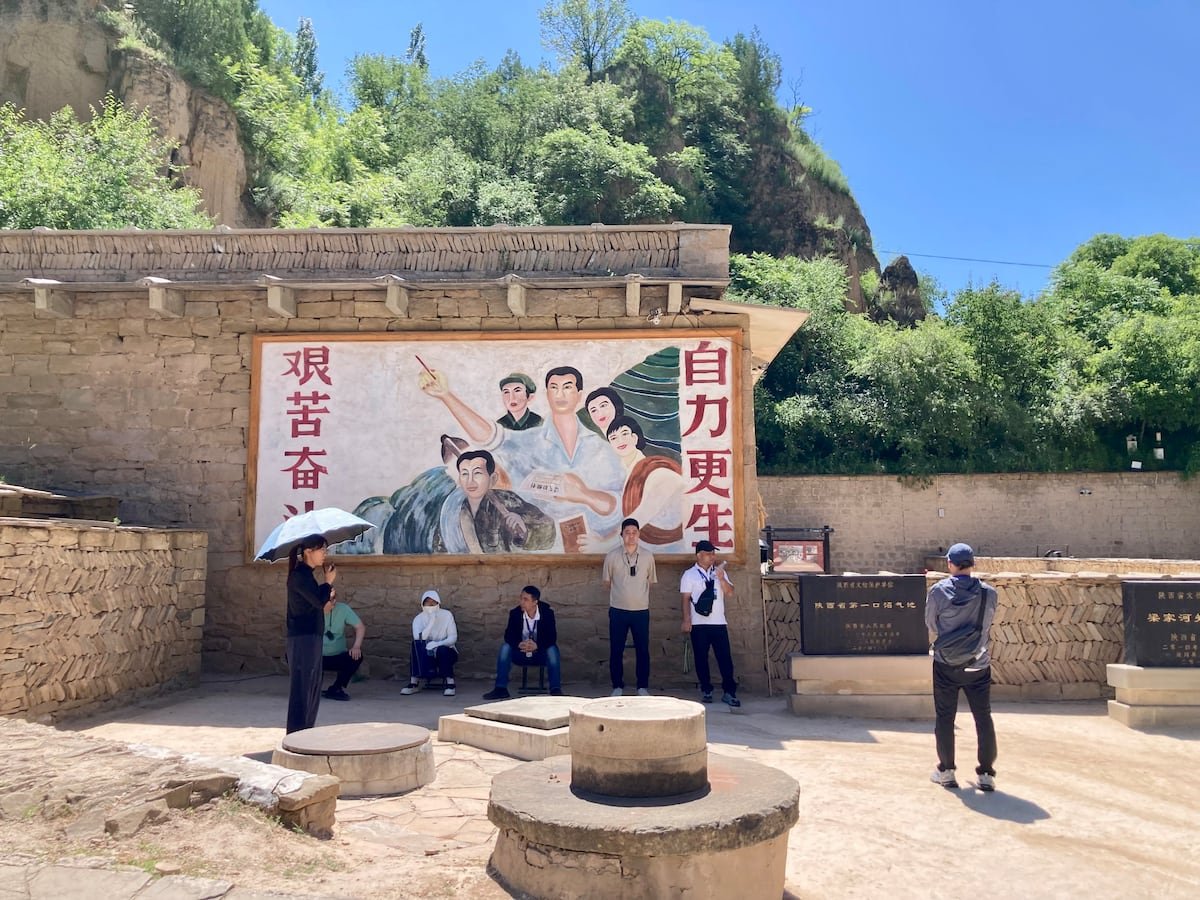
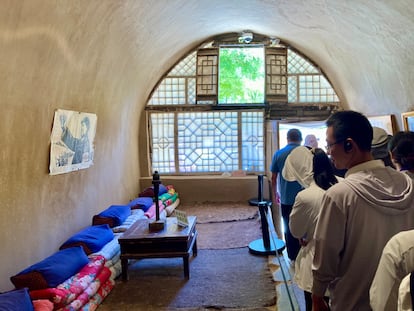
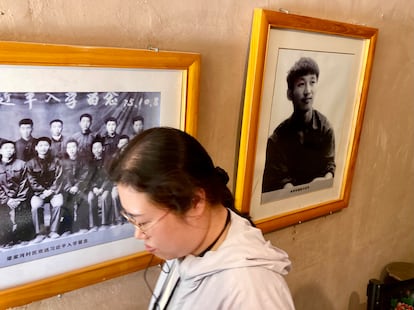
Xi, who recently turned 73, helped dig the well in Liangjiahe more than half a century ago. Dubbed the “well of the young intellectuals,” a plaque recalls how “Jinping” — his given name — led the village in 1973 to solve its chronic water shortage. The teenager had been sent to this remote village in Shaanxi province, where locals still lived in caves, as part of the re‑education campaigns during Mao Zedong’s devastating Cultural Revolution.
He arrived in 1969 at age 15. He struggled to fit in, but it was here — after enduring all manner of hardship — that he found his calling to serve the people and the party. A mural depicts a young Xi with the message: “Hard work; self‑reliance.” That is the metaphor of the well, the message emphasized by propaganda in Liangjiahe: Xi dug “with his legs completely submerged in muddy water,” a panel recalls.
Today, the site is a popular destination for so-called “red tourism,” although, more than ordinary tourists, it draws visitors tied to the ideological training of Chinese Communist Party members. “Here he learned the spirit of overcoming the harshest conditions,” a guide explains to one such group, shepherded by a “leadership school” specializing in “Xi Jinping Thought.” This, too, is a hallmark of his era. Under his rule, education related to the president and his worldview has been reinforced at every level, from schools to the highest ranks. It is an ongoing instruction designed to counter what Xi sees as the “historical nihilism” that brought down the Soviet Union.
“The knife is sharpened on a stone; people are strengthened by adversity,” he said of his seven years in the village in 2002, when he was a promising governor of Fujian province. Two decades later, in 2022, as he was about to be reelected party general secretary for a historic third term, Xi urged perseverance in the “spirit of struggle” developed “in the face of abrupt changes in the international situation” and “the blackmail, obstacles, blockades and maximum pressure from abroad.”
U.S. historian Joseph Torigian believes the Chinese leader was the answer to the idea that contact with the West would lead China to open up in the style of liberal democracies. “Xi believes, instead, in the need to harden the regime against political and economic pressure; to change course and show that there are alternatives to the Western system,” he says by phone.
Torigian, a senior fellow at the Council on Foreign Relations, is an expert on Xi’s father, Xi Zhongxun, a revolutionary leader who fought alongside Mao, and has published a book on him called The Party’s Interest Come First. Xi’s son is what is commonly known as a “princeling,” the offspring of the generation of communists who founded the People’s Republic and rose to senior positions once in Beijing.
They were turbulent years in any case. Xi’s father rose to vice premier only to be purged later. He would spend years in isolation while his son faced the wrath of the Red Guards because of his family background and was sent to the countryside. But he continued to believe in the system: from the village, Xi sent a dozen letters to the Party until they admitted him.
From Liangjiahe, he returned to Beijing to study chemical engineering at the prestigious Tsinghua University. With Mao’s death in 1976, the years of reform and opening under Deng Xiaoping began. His father returned to public life. The era of rapid growth was beginning, and many princelings set about making up for lost time, enjoying themselves and absorbing Western influences. Xi, by contrast, “chose to survive by becoming redder than the red,” a friend later told the U.S. Embassy, according to a WikiLeaks diplomatic cable.
His first notable post was as secretary to the defense minister; he later pursued a career away from Beijing. In 1985, as a local official in Hebei province, he traveled to the U.S. state of Iowa as part of a delegation to learn agricultural techniques and strengthen ties. For a couple of nights, he even experienced what it was like to sleep in the bedroom of a young American decorated with Star Trek memorabilia. “A pleasant, charming and intelligent leader; very curious about many aspects of agriculture, food processing and life in the United States,” recalls Luca Berrone, an Italian‑American businessman who organized that trip.
They spent two weeks together, and Berrone would not connect the dots again until 2011, when Xi was vice president and the apparent heir. Since then, Berrone has been invited to a dozen meetings with the Chinese president, who often cites his Iowa trip as an example of the importance of people‑to‑people ties to avoid conflict. “I think he does not seek a confrontational position, but rather genuine mutually beneficial cooperation,” Berrone says. “He respects the United States a lot.”
It is true that Xi’s only daughter, who has left almost no public trace, graduated from Harvard in 2014. But four decades after that Iowa visit, China is no longer the student, but a disruptive power competing on equal terms in the economic, military and technological spheres — and that has changed things.
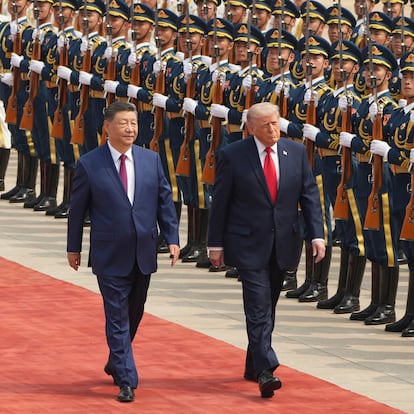
During the bruising trade clash of 2025, Beijing showed the tools it had prepared to protect its interests by restricting critical resources. When Trump landed in China in May for a summit with Xi, the choreography was staged to convey that the two nations were negotiating on equal footing. The cordial détente was sealed with a formula proposed by the Chinese leader that softens the Cold War premise of co‑existence between powers: “constructive strategic stability.”
“He is a very strong leader who should not be underestimated,” says Rafael Dezcallar, former Spanish ambassador to Beijing and author of El ascenso de China (The Rise of China). “He wants to place China where it belongs, as a great power capable of competing with the United States, never again subjected to its influence or dominance, self‑sufficient in technology and in fundamental matters.” On the domestic front: “He has managed to put the party under his control.”
Xi was chosen as a consensus figure by those within the Party who believed that firm leadership was needed to rein in years of excesses. As soon as he took office, he launched an anti-corruption campaign that is still ongoing. Since 2012, more than seven million public officials have been found guilty and sanctioned by disciplinary inspection and supervisory bodies. The crackdown has extended from the grassroots level to the very top, reaching ministers and the military leadership.
This is compounded by a marked anti-hedonistic impulse, reflected in measures such as banning alcohol, luxury dishes, and cigarettes at official banquets. “Calvinist communism,” as a European diplomatic source based in Beijing describes it. For Xi, the source adds, Westernization amounts to paganism.
Xi has reinstated ideology and repositioned the Party at the center. His ideology, officially inscribed in the Constitution alongside Mao’s and Deng’s, is cited in every political speech. He is also a bestselling author: the three best‑selling books in China in 2025 were volumes compiling Xi’s ideas, according to Chinese media.
Wang Yiwei, vice president of the Academy of Xi Jinping Thought on Socialism with Chinese Characteristics for a New Era (the convoluted official name of his ideology), summarizes the president’s vision as “Xivilization.” He sees it as a new phase of “traditional Leninism” that confronted the capitalist system. “Now we have changed: whether socialism, capitalism or any other ism, all have a shared future.” And it draws not only on Karl Marx. “We have synergies with China’s classical culture and civilization.”
Torigian also believes that Xi’s sense of history leads him to fuse present-day Communist China with its past: he is mindful of the repeated collapse of imperial dynasties and witnessed, in his youth, the fall of communism around the world. This prompts him to ask: “How do you immortalize his vision? How do you ensure that what he believes the country needs survives not only while he lives but into the future? How do you prevent institutions from decaying and ultimately collapsing?” With no apparent successor for now, most analysts believe he will remain in power beyond 2030.
During his tenure, a heavy hand has been the answer to dissent. He has launched campaigns against anything that smells of divergence in civil society and has imposed firm control over Xinjiang, Tibet, and Hong Kong. It is hard to gauge his approval in an authoritarian country where surveys about the leader are not published, and technological surveillance reaches unimaginable levels. Simply uttering his name in public elicits respect, and it is not uncommon for people, when referring to the president, to lower their voices or speak in euphemisms.
If you ask people about Xi, the response is usually positive. “We only have one president, not like abroad,” says a taxi driver in Yan’an, the city nearest Liangjiahe and another hub of red tourism. Yan’an was where Mao ended the Long March in 1935, and its streets mix communist monuments with a bustling provincial life.
“Xi is not bad, but he still has a long way to reach Mao’s level,” replies Bai Guanglin, a 76‑year‑old farmer, at the city’s revolutionary museum. His granddaughter, Bai Yuxin, 28, a high‑school teacher, adds: “He has contributed a lot economically and in foreign relations.”
Yan’an was also the destination Xi chose for his first trip after being reelected in 2022. Alongside the other six members of the Politburo Standing Committee — the Party’s top decision-making body — he visited the caves where Mao once lived, toured the museum, and in his speeches called for “hard work” and a “fighting spirit,” while recalling those seven years he spent in the village.
Sign up for our weekly newsletter to get more English-language news coverage from EL PAÍS USA Edition