A life without imagination is not a life. Without fantasy, without creation, without daydreams or fairy tales. But how are we going to develop our imagination if we do not do so from childhood, playing with our toys, if we are instead dazzled by the bright screens of our phones? Thirty years ago in November 1995, when Toy Story premiered, that question was unthinkable. Today, after three sequels, half a dozen shorts, a handful of mini-shorts, a series and television specials, and with Toy Story 5 about to open in movie theaters, the question is unavoidable.
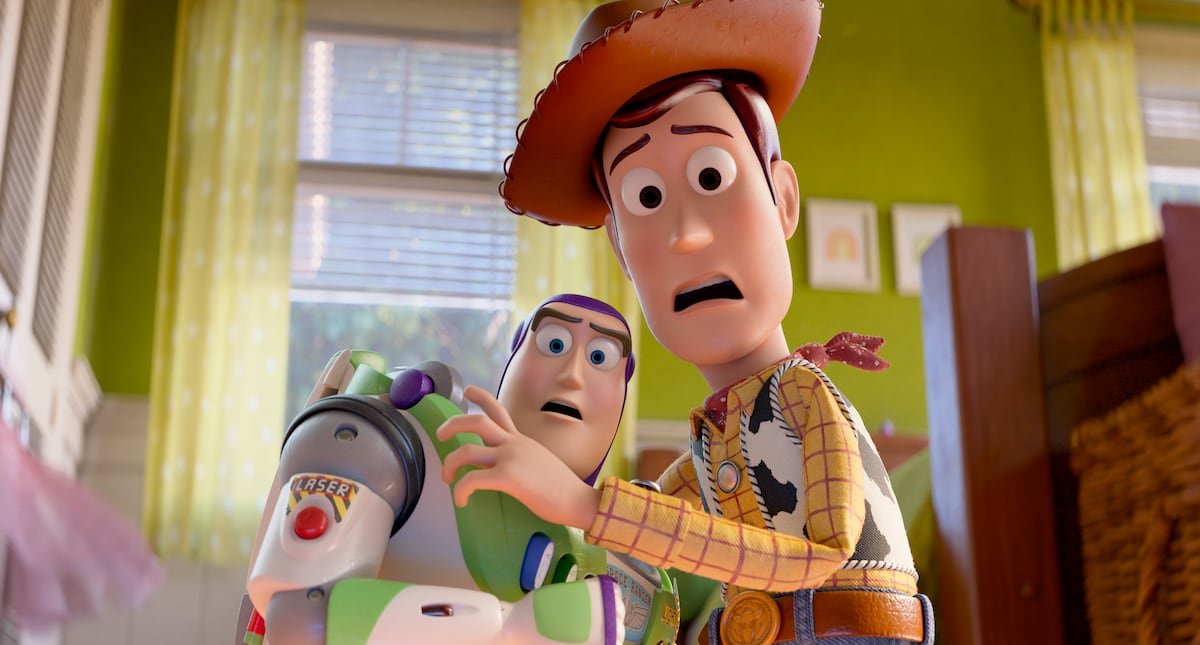
Starting on June 17, Buzz Lightyear, the cowboy Woody, his colleague Jessie, Mr. and Mrs. Potato Head, the tyrannosaur Rex and the whole gang are returning to theaters to accompany not Andy — now all grown up — but, as they have for a few years, Bonnie, who has also kept growing. This time, however, their adventures gain an addition as logical on screen as it is in children’s (and adults’) lives: technology. An arguably malevolent green tablet called Lilypad will become the new antagonist. Or maybe not entirely: ultimately it seeks the same thing as everyone else — to care for and entertain Bonnie, helping her make friends, even if its methods aren’t the best. The question is: will technology make toys disappear?
Not only has Toy Story’s background changed; its form has changed too. The franchise seeks an update for how it presents itself to audiences, and for that, it features Bad Bunny, Penélope Cruz and Bizarrap among its new voice cast. The icing on the cake is its soundtrack, which includes a song composed by superstar (and major fan of the Toy Story franchise Taylor Swift, which the artist performed live at the world premiere in Hollywood on Tuesday. She capped the appearance emotionally with a rendition of “You’ve Got a Friend in Me” alongside its composer, veteran Randy Newman, at the piano.
But it will be the contrasts between technology and toys that will attract attention in this fifth film. In fact, the fourth installment, released in 2019, could already have explored this… “I felt like I was worried we might be a little late to talk about it,” admits director Andrew Stanton in a conversation with EL PAÍS in Los Angeles. He has been part of the saga from the start: he was a screenwriter on previous films and now writes and, finally, directs Toy Story 5. Joining him in the conversation were his co-director and co-writer Kenna Harris, who also worked on Hoppers, Elemental and Elio; and producer Lindsey Collins, who has worked on Wall·E and Finding Dory. “But it turns out,” Stanton continues, “that we hit on something everyone is worried about.”
If previous Toy Story films had enemies — real enemies — it was because they were genuinely bad. Here, by contrast, technology is more a counterpart, a firm opponent but not a hateful villain. Lilypad and its kind are not villains per se, but they do captivate Bonnie and her friends in the same way we see technology hooking the youngest today, hindering their socialization and sometimes preventing them from thinking or managing their emotions. “They have a goal that aligns with the toys’. They care; our machines are concerned about the girl,” Stanton reflects. “They just have a very different opinion about how things should be.” In fact, the trio jokes that they realized Lily was “basically an overprotective mother who is also a personal assistant.” “She would say, ‘We’re going to make these friends, we’re going to follow these steps and we’re going to get into Harvard.’ Everything starts with good intentions, but it’s a method and a way of acting very different from how the toys want to support the child. That’s where they clash,” they say. “These battling philosophies is kind of the way we approach this. Which is very real,” Collins adds.
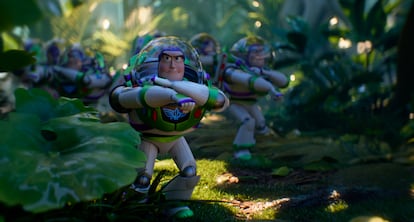
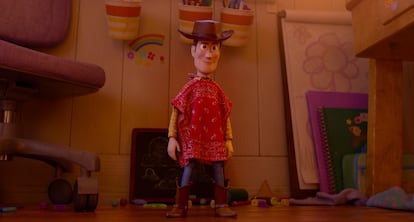
The physical, anti-technology heroine, as real as a toy can be, is Jessie (do not, under any circumstances, call her Jessica). Half a dozen Buzz Lightyears also have their own subplot, and of course Woody does too. Although in the previous installment it seemed he was saying goodbye to the toy world, the fastest cowboy in the West would never leave his friends alone on this adventure. Thirty years have passed, and they have passed for everyone. Woody is now a hippy-looking gentleman wearing a poncho, with a paunch and a thinning pate. Time passes. Changes and replacements arrive. “Jessie was kind of the perfect character to end up taking on this particular battle. And so it’s nice to see how that kind of all worked out together,” says Kenna Harris. After years of Andy, Buzz and Woody, now Bonnie, her friend Blaze, Jessie and Lilypad take the lead.
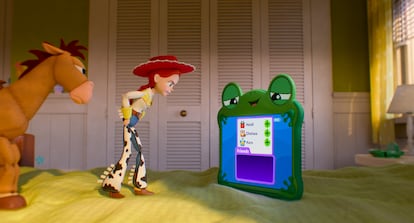
It seems the girl finally takes the reins, literally and figuratively. Why her? Everyone wants to answer. Andrew Stanton jumps in, and the three laugh at his taking the floor as the only man. “At the end of Four, when Woody gave his badge to Jessie, I knew that if there was a next movie, it had to lead with Jessie now. That was always the hope. I just didn’t know I’d be the one,” admits the two-time Oscar winner (for Wall·E and Finding Nemo), who has about 20 titles to his name and has been at Pixar for nearly 40 years, although he had never directed a Toy Story film before.
“We all connected on the fact that we felt like there was way more to explore with her and that she’s just so fun because she’s really different from Woody‚” reflects the youngest of the three, co-director McKenna Harris. “It’s not just seeing the same old sheriff in town. Yeah, she thinks totally differently from him. He’s more of the straight man and she’s like, leap before you think and fight before you talk. She’s built to be a hero. Very unhinged, very chaotic,” they laugh. “You want to see the movie just because she’s hilarious.” Indeed: Jessie dominates the most hilarious scenes, alongside old technological glories (a GPS, an old children’s digital camera), but also the most tender and nostalgic, by the tree where she was abandoned.
So, despite the invasion of screens, will there still be toys around? “Depending on what day you ask me, if I’m in a bad mood, I’ll be like, I don’t know. And then on a good day, I’d like to think they always will to some degree,” says Stanton, adding that “when I say toys, what I really worry about is imagination, that the kids are really just pretending instead of having the world all explained to them on a screen and in some pre-planned device.” Producer Collins says there is also a nostalgic tendency to rescue these old playthings, as she sees with her own children. “They talk a lot about what it was like before technology, before phones… There is this curiosity around the pre-tech era and I think that’s an interesting kind of desire that seems to be springing up.”
Her colleague Harris also supports the point, saying that technology, after all, is changeable and “has a shelf life.” “But humans are programmed to play, to be imaginative. So I have to imagine there’s always going to be this holdout of folks who need that and crave that. And that’s why toys will make it.”
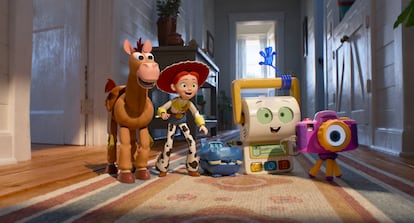
If anyone is particularly pro-toy it’s production designer Bob Pauley, who has brought to life the most famous toys of the last 30 years. A Pixar legend, he created Buzz Lightyear (he recalls that in just a couple of months they reached the definitive version), and now new characters like Smarty Pants and Lilypad, which he admits took a bit longer to develop in order to humanize the tablet. “It was a fun process because we wanted to make sure it was a character the audience could connect with,” he tells this newspaper. They wanted its face to be as expressive as possible and paid special attention to details like the eyes, for example.
“Oh toys are gonna be around forever. I believe that so much,” reflects the veteran designer, who believes there is room for everything: educational toys, developmental toys, even the simple wooden ones. “The simpler toys are active play, where you’re thinking about stories and you’re kind of creating little worlds. So I don’t think they’re going to disappear. I hope not. Oh, no.”